What to Wear to a Job Interview (2026)
Stop guessing what to wear to a job interview. Get the complete 2026 guide with outfit formulas, video interview rules, and budget-friendly strategies.


Preparing for a job interview isn't just about practicing answers and researching the company. You also need to dress the part.
Most "interview outfit" advice is either too vague ("dress professionally") or too rigid ("always wear a suit"). Real life is messier. You might be interviewing at a bank on Monday and a startup on Thursday. You might have a Zoom screen that makes stripes shimmer like a glitch. You might be brilliant at the job and still lose points because you looked like you didn't read the room.
This guide gives you a simple system that works for almost every role, plus outfit templates by industry, in-person vs video rules, and the "tiny details" that quietly matter.
Why Your Interview Outfit Matters for First Impressions
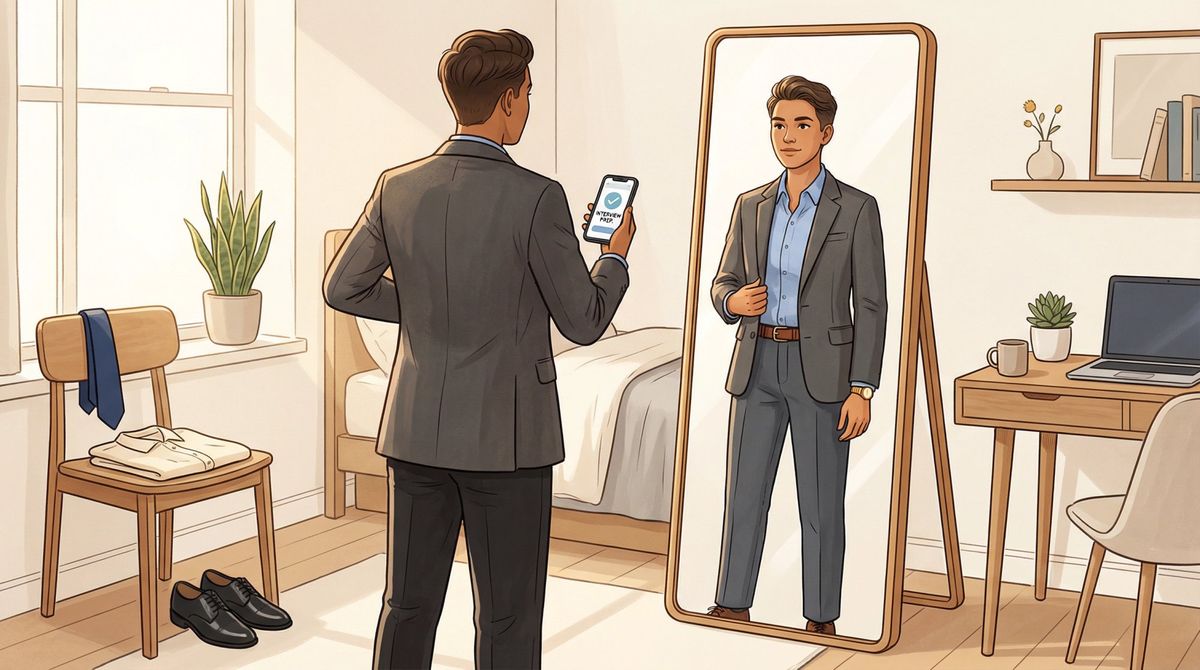
Your interview attire shapes first impressions within seconds of meeting your interviewer.
Research shows that hiring managers form opinions about a candidate within the first few seconds of meeting them. Fair or not, your appearance can heavily influence those initial impressions.
The data is stark:
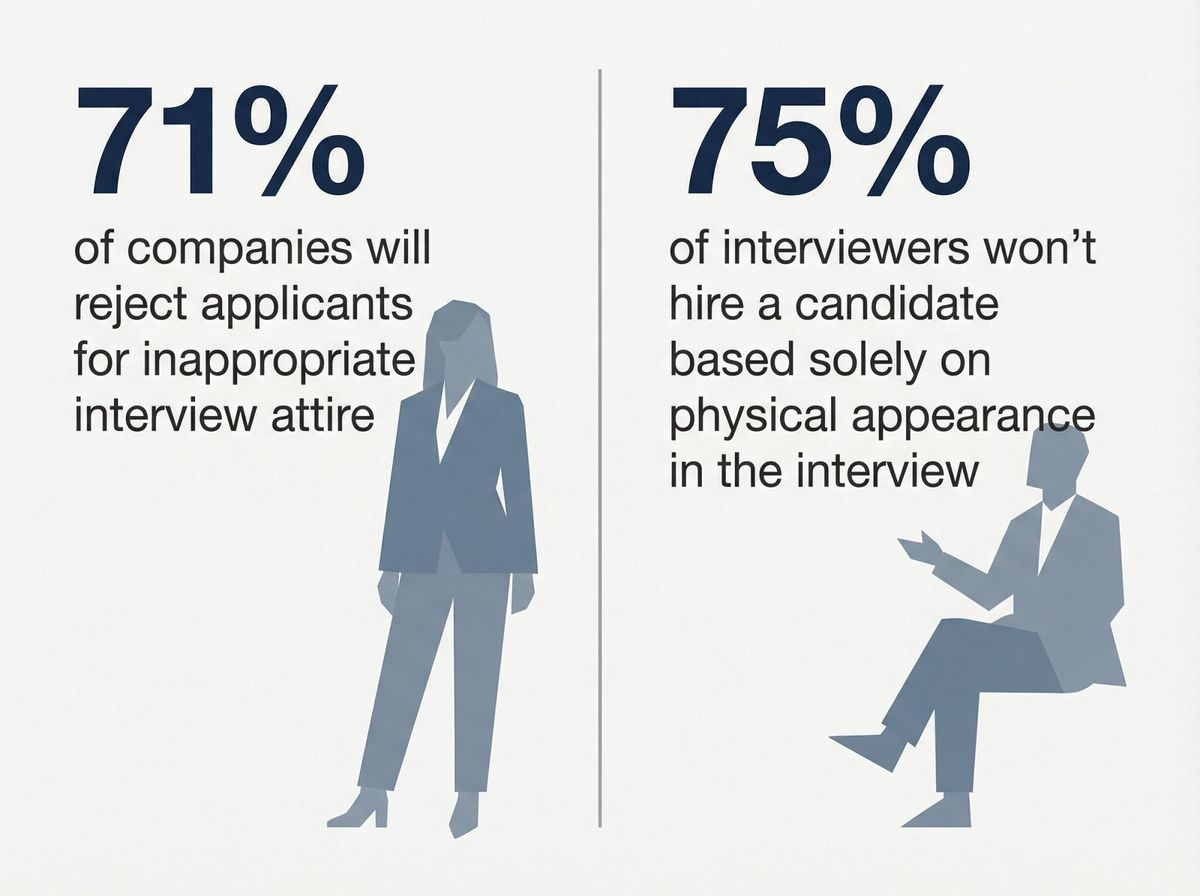
• 71% of companies will reject an applicant if they aren't dressed appropriately for the interview
• 75% of interviewers have chosen not to hire someone based solely on the candidate's physical appearance in the interview
Why do employers care so much about attire?
Your clothing signals your professionalism, respect, and cultural fit. A polished outfit shows you take the opportunity seriously and understand what's expected in that workplace. On the other hand, if you show up in overly casual or sloppy clothes, it can suggest lack of effort or poor judgment (even if you have great qualifications).
Dressing inappropriately may be the most detrimental mistake job candidates make in interviews. It can sink your chances before you even speak.
In 2026 many offices have relaxed day-to-day dress codes. Startup culture and remote work have made hoodies and jeans common. But an interview is a special situation where you should still err on the side of more professional attire.
Think of your outfit as part of your presentation. It won't get you the job on its own, but it can definitely lose you the job if done wrong.
One powerful insight from research: people judge you less on "style" and more on appropriateness for the context.
So the goal isn't "look fancy." The goal is look appropriate, intentional, and non-distracting.
The Safest Job Interview Outfit for Most Roles
Default Interview Outfit Formula (Works for 90% of Interviews)
If you have no clue what the dress code is, wear polished business casual and give yourself the option to "level up" in seconds.
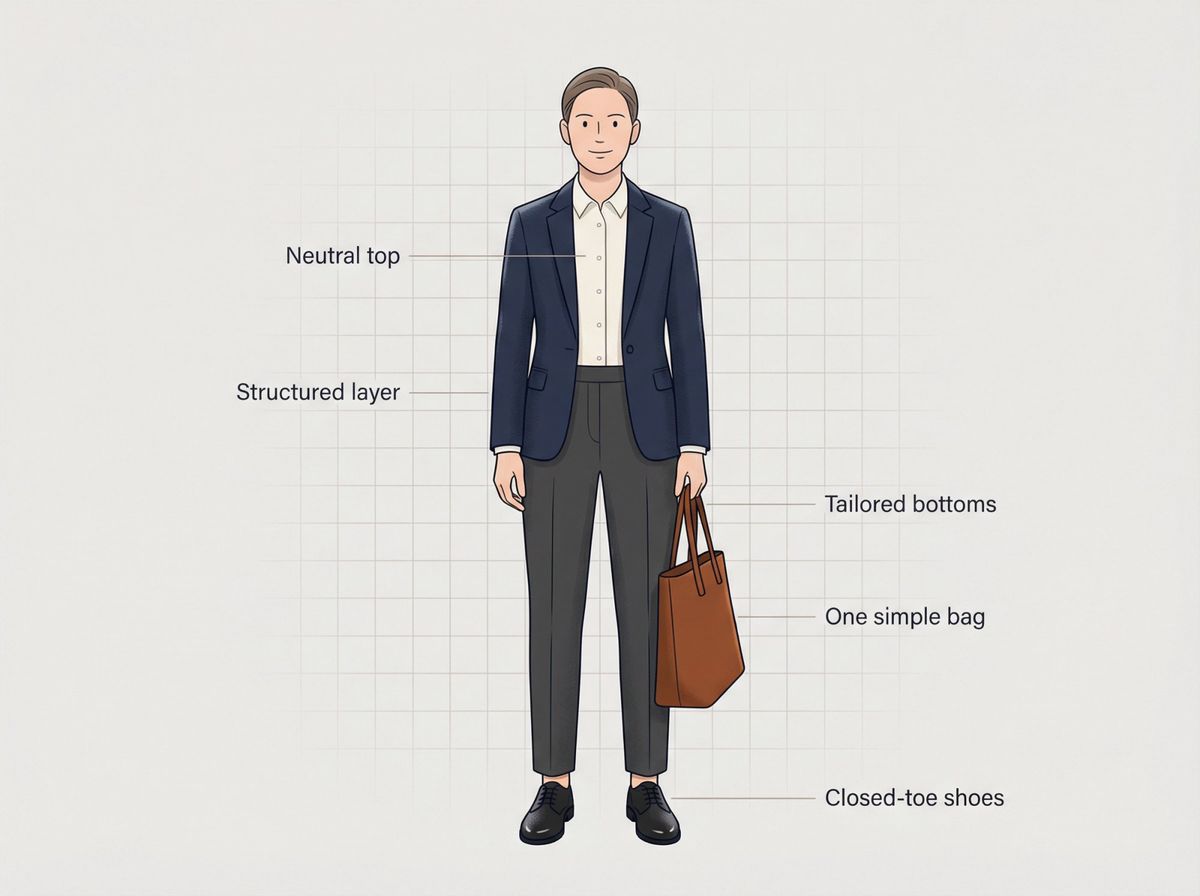
Your default outfit formula:
| Component | What to Wear |
|---|---|
| Neutral top | Button-down shirt, blouse, or fine-knit |
| Structured layer | Blazer or smart jacket |
| Tailored bottoms | Trousers, chinos, or knee-length/midi skirt |
| Closed-toe shoes | Clean, minimal, no obvious scuffs |
| One simple bag | Tote, brief, or plain backpack that looks new-ish |
Why this works: it's "low-variance." Almost nobody will think you're underdressed, and if you walk in and everyone's in hoodies, you can remove the blazer and still look normal.
This approach emphasizes fitting today's workplace norms, the employer's dress code, and the interview setting or location.
How to Research the Company Dress Code Before Your Interview
Before you decide what to wear, do some homework on the company's typical dress code and culture. Different organizations (and industries) have very different norms, so an outfit that's perfect for one interview might be overkill or too casual for another.
Here's how to figure out what's appropriate:
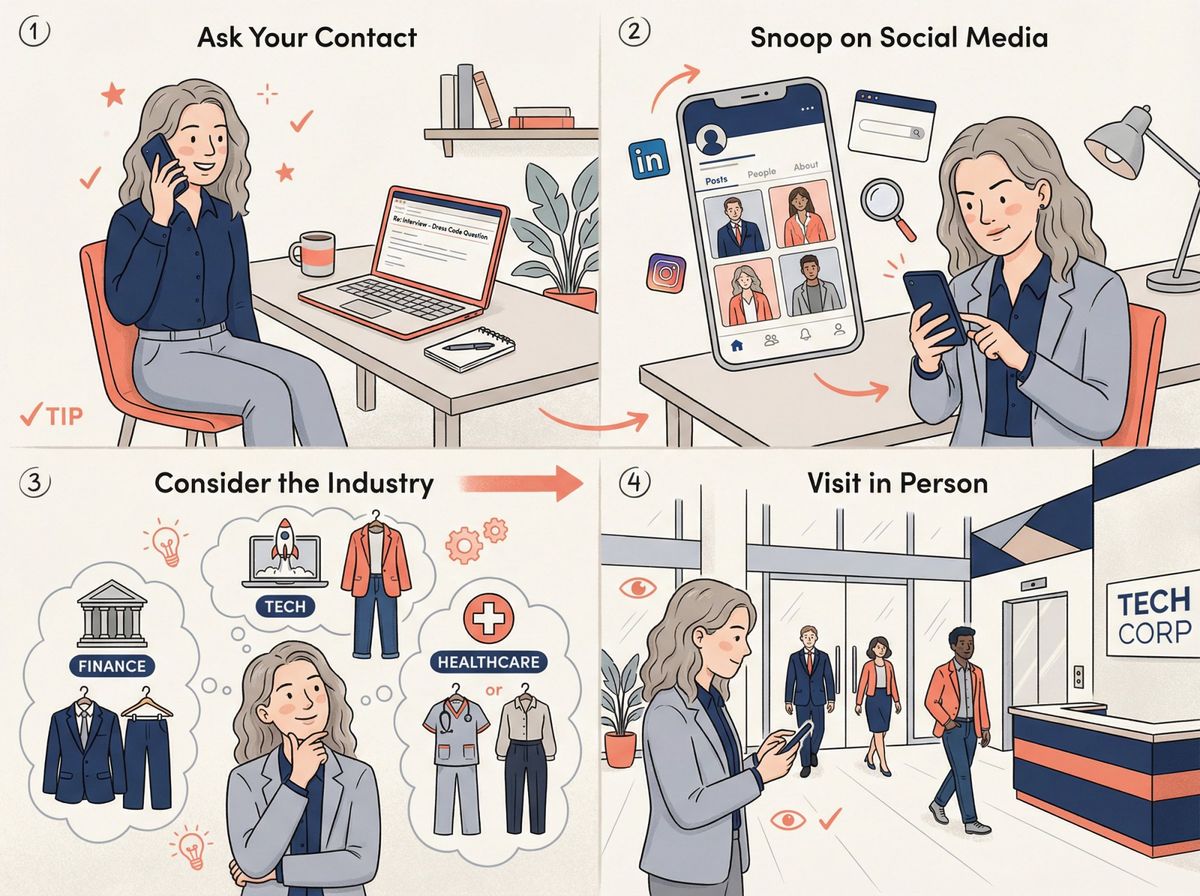
① Ask your contact
If you have an HR recruiter or hiring manager as a point of contact, don't be afraid to ask them about the dress code. You might say, "I want to make sure I align with your company's culture. How do people usually dress at the office, and what would you suggest I wear for the interview?"
Most recruiters will appreciate that you care and give you guidance. They may use terms like "business casual" or "business formal" (we'll define those in the next sections).
② Snoop on social media
Check the company's website, about/careers pages, or social media accounts for any photos or videos of employees at work. This can give you a visual sense of how people dress.
A company's LinkedIn or Instagram might have team event photos. A quick scan could show whether folks are in T-shirts and jeans or suits and ties.
③ Consider the industry
If you can't get specific info, lean on industry norms. For example, finance, banking, law, and consulting firms usually expect more formal attire (suits, blazers, etc.), whereas tech startups or creative agencies tend to dress more casually or with trendy flair.
Retail and hospitality interviews might even expect you to dress in the style of the brand's employees or customers. Think about what people in that line of work usually wear.
④ Visit in person (if feasible)
If the interview is on-site and you're nearby, you could do a quick drive-by or lobby visit to observe what current employees are wearing. This isn't always possible, but it can be a useful reality check.
The "Dress One Step Up" Rule for Interviews
Once you have a sense of the company's general dress environment, a good rule of thumb is to dress one notch more formal than the norm. Career coaches often call this "dressing one step up."
For example, if everyday attire at the office is jeans and t-shirts, you might wear neat chinos and a collared shirt to your interview (still comfortable but a clear step more professional).
If the office is business casual daily, you might wear a full suit or a blazer ensemble to the interview (a step up toward business formal). The idea is to show you've made an extra effort to look polished for the occasion without wildly overshooting what employees typically wear.
Interview Outfit System: Choose Your Dress Code Level
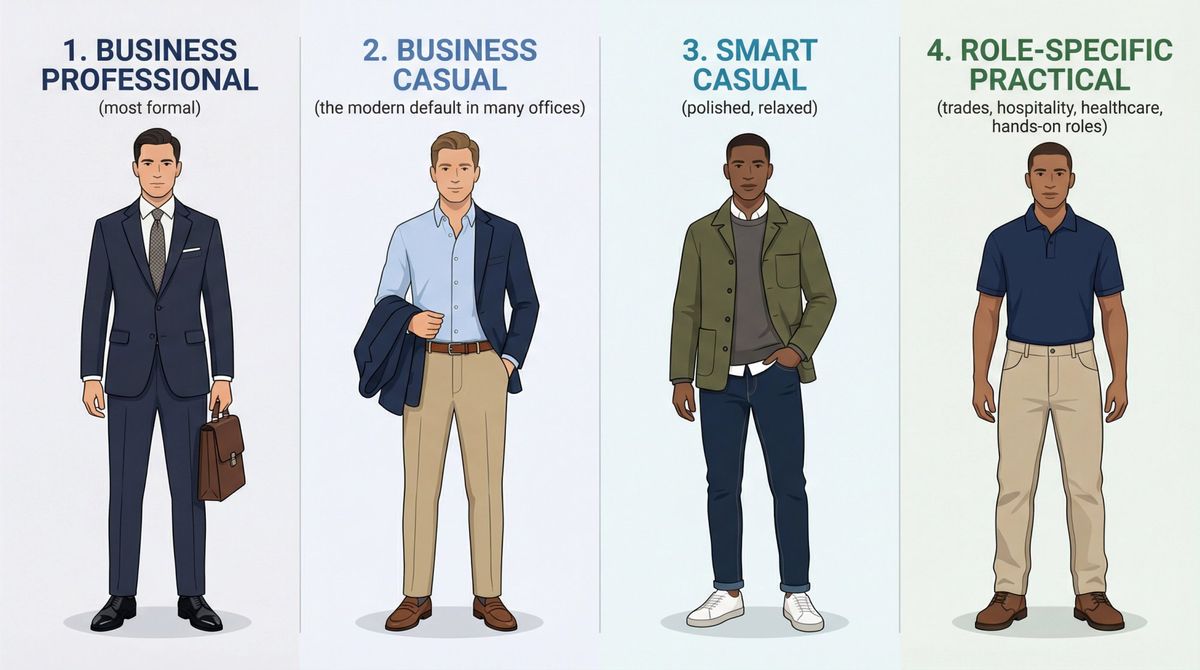
Here's a practical algorithm you can follow every time.
Step 1: Choose Your Target Dress Code Level
You're choosing one of these four targets:
1) Business professional (most formal)
2) Business casual (the modern default in many offices)
3) Smart casual (polished, relaxed)
4) Role-specific practical (trades, hospitality, healthcare, hands-on roles)
If you're unsure, start at business casual and bring one item that lets you level up (blazer, tie, nicer shoes).
Step 2: Research the Company Culture Fast
Most people skip this step, then panic and guess.
Here's how to research the vibe fast:
→ Company photos: website, LinkedIn, Instagram, press shots, team pages
→ Role clues: client-facing roles usually skew more formal than internal-only roles
→ Location clues: city finance district vs creative neighborhood can matter (even within the same city)
→ Ask directly: a short "What's the interview dress code?" message is normal and encouraged
Step 3: Build Your Outfit Using the "Signal Stack"
Your outfit sends a stack of signals. Make each layer intentional:
→ Fit: the loudest signal
Slightly cheap but well-fitting beats expensive but sloppy almost every time.
→ Cleanliness and care: the "respect" signal
Wrinkles, pet hair, stains, scuffed shoes scream "last-minute." Interview guidance specifically recommends checking for defects and ensuring clothes are pressed and wrinkle-free.
→ Formality level: the "I understand the context" signal
This is where you match business professional vs casual.
→ Distraction level: the "focus on my answers" signal
Loud prints, jangly jewelry, strong fragrance, overly bright colors can pull attention away from what you're saying.
On fragrance: Experts explicitly recommend avoiding strong perfume/cologne.
Critical insight: Slightly cheap but well-fitting beats expensive but sloppy almost every time. Focus on fit before you focus on brand.
What Each Dress Code Actually Means for Interviews
"Business casual" is the most confusing label on earth. Different people mean different things. So here are practical definitions.
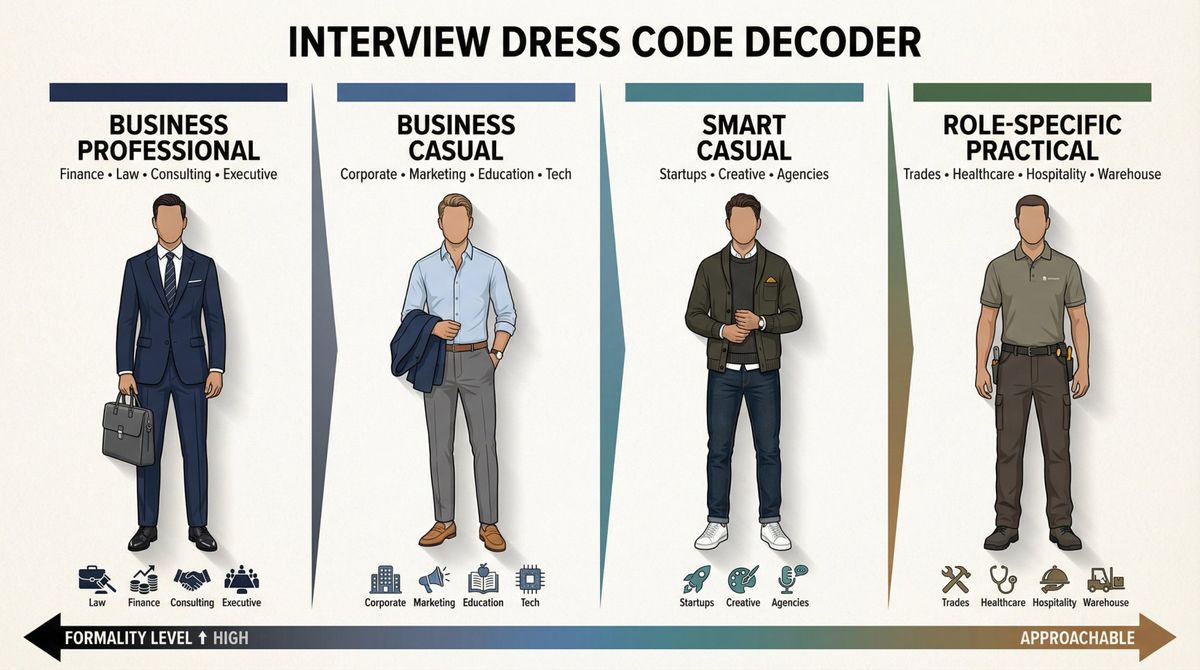
Business Professional: When to Wear a Suit to an Interview
What it is:
Business formal is the highest level of professional dress. This is the realm of full suits, crisp shirts, and conservative accessories. You'll choose business formal attire for interviews in industries like finance, investment banking, accounting, law, consulting, or executive roles in corporate settings.
If you're interviewing at a Fortune 500 company's headquarters or any company that explicitly mentions "professional attire," assume business formal.
| Component | For Men | For Women |
|---|---|---|
| Main outfit | Matched two-piece suit (navy, charcoal, black) | Pant suit, skirt suit, or sheath dress with blazer (navy, black, gray) |
| Shirt/Top | Long-sleeve dress shirt (white or light blue) | Professional blouse or button-up (solid or subtle prints) |
| Accessories | Conservative tie that complements the suit | Simple jewelry (stud earrings, simple necklace) |
| Shoes | Polished dress shoes (oxfords, leather lace-ups) | Closed-toe pumps or flats (black or brown) |
| Final touch | Dark dress socks, belt matching shoes | Understated makeup, moderate heel height |
Tips for business formal:
In this dress code, it's better to be slightly conservative than too flashy. Neutral colors and classic cuts are your friend (save the bold fashion statements for after you land the job).
Ensure your clothes are pressed and immaculate (no wrinkles, no stains). Attention to these details shows professionalism. Also, pay attention to grooming: neat hair, clean nails, and subtle or no fragrance (a strong cologne or perfume can be overwhelming in close quarters).
Modern note: Business formal doesn't have to mean boring. In 2026, gender-neutral power suits and modern tailored looks are increasingly popular for people of all genders. Feel free to choose a suit style that fits you best (whether that's a traditional menswear cut, womenswear style, or a new unisex design), as long as it's polished.
Business Casual Interview Attire: Polished Yet Relaxed
Choose this when:
→ Most corporate roles
→ Admin, operations, marketing, education, many tech teams
→ You're unsure and want the safest general option
Business casual is professional clothing that's less tailored than formal. It explicitly is not a T-shirt, jeans, shorts, or loud prints. It typically includes button-down tops, dress trousers/skirts, and closed-toe shoes.
| Component | For Men | For Women |
|---|---|---|
| Bottoms | Dress slacks or chinos (black, navy, gray, khaki) | Tailored dress pants, chinos, or knee-length skirt |
| Top | Collared shirt (button-down or crisp polo) | Blouse, button-down shirt, or dressy top |
| Optional layer | Blazer, sport coat, or neat sweater | Blazer, cardigan, or structured jacket |
| Tie | Optional (can remove if overdressed) | Not applicable |
| Shoes | Leather loafers, oxfords, brogues, or slip-ons | Flats, low-to-mid heels, loafers, or ankle boots |
| Belt | Match shoe color | Optional but recommended |
Overall look:
Aim for "professional but approachable". You shouldn't look as stiff as a full suit, but you still want a neat, coordinated ensemble. Colors in business casual can be a bit more varied than formal. You can incorporate softer shades or simple patterns. Just avoid anything too loud or distracting (neon colors, wild prints) that could pull focus.
Smart Casual for Startup & Tech Interviews
Choose this when:
→ Startups, creative roles, casual offices
→ The team photos show jeans, trainers, hoodies
→ The interview is a coffee chat, early-stage startup, or creative studio
Smart casual is "clean and structured," not "whatever."
| Component | What to Wear | Key Principle |
|---|---|---|
| Bottoms | Dark, clean jeans (no rips, no fading) only if confident it fits culture OR chinos | Well-fitted, intentional choices |
| Top | Crisp shirt, quality knit, or blouse | More than a basic tee |
| Layer | Blazer, chore jacket, or structured cardigan | Adds polish without stiffness |
| Shoes | Clean minimalist shoes (smart trainers in some contexts) | Neat and put-together |
Key elements of smart casual:
You can incorporate items like dark, well-fitted jeans or non-denim pants, collared shirts or quality tops, and casual blazers or sweaters. The look is less formal than business casual (ties and formal suits are not needed) but more intentional than everyday street clothes. Think in terms of neat, clean, and put-together versions of casual attire.
Show some personality (within reason):
In creative industries especially, it's okay to infuse a bit of your personal style (a pop of color, an interesting accessory, or a fashionable piece) to signal creativity and culture fit. Just keep it subtle enough that your outfit still reads as professional.
Stay polished:
"Casual" doesn't mean "anything goes." The smart part of smart casual means clothes should be in good condition, clean, and well-fitting. No holes, no stains, no overly wrinkled shirts. Aim for intentional casual, not sloppy casual.
What to Wear for Hands-On & Practical Role Interviews
Choose this when:
→ Trades, warehouse, hospitality, labs, healthcare, on-site work
→ There's a safety component or practical demonstration
You still want neatness, but you also don't want to look like you can't do the job.
| Component | What to Wear | Why It Matters |
|---|---|---|
| Top | Plain polo, button-down, or neat work shirt | Shows professionalism without restricting movement |
| Bottoms | Chinos or work trousers that look clean and intentional | Appropriate for physical tasks |
| Shoes | Closed-toe shoes appropriate for the environment | Safety first |
| Accessories | Minimal or none | Avoid anything unsafe (dangly jewelry, loose scarves near machinery) |
If there's any chance of a site tour or practical demo, ask what footwear is allowed.
What to Wear to a Job Interview by Industry
Use this as a starting point, then adjust based on company culture.
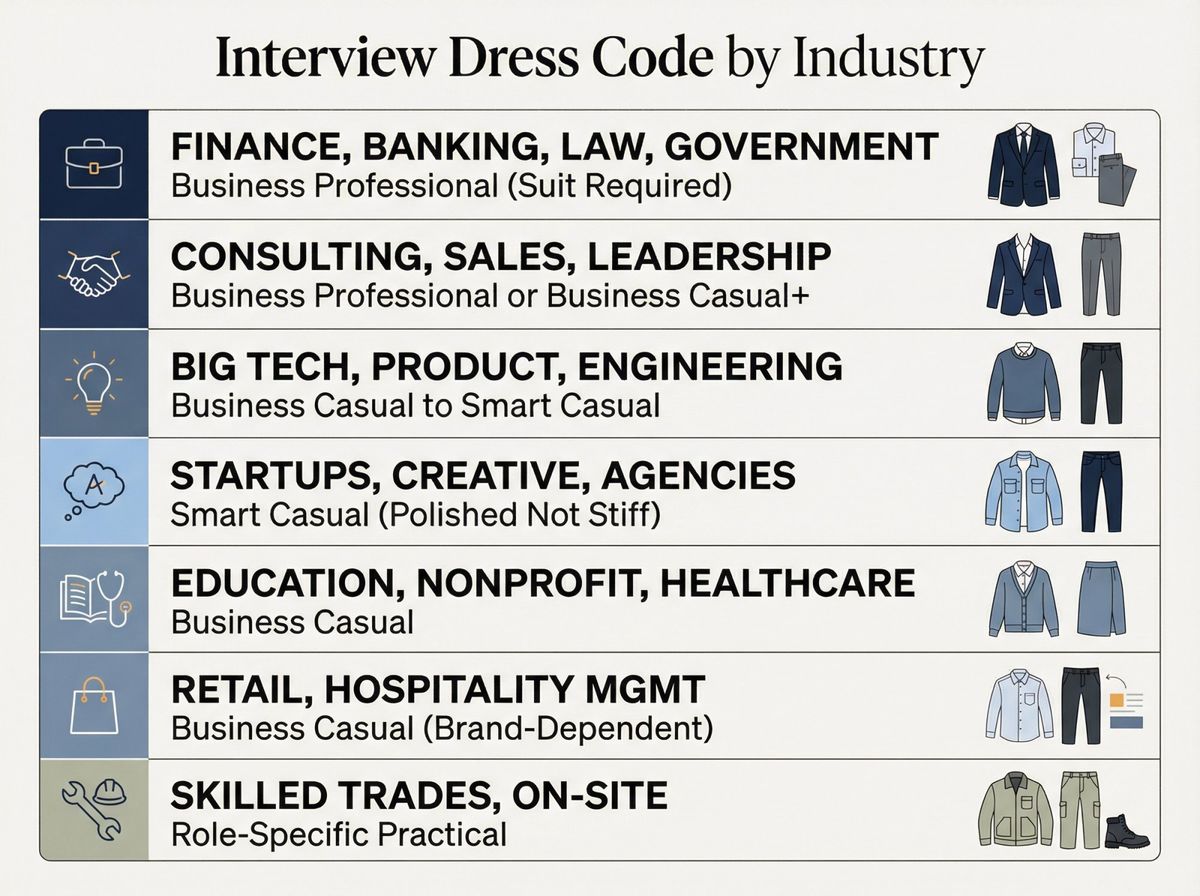
| Industry/Role | Recommended Attire Level |
|---|---|
| Finance, banking, investment, law, government | Business professional (suit-level) |
| Consulting, enterprise sales, corporate leadership | Business professional or elevated business casual (blazer required) |
| Big-company tech, product, engineering | Business casual; smart casual in very casual orgs |
| Startups, creative studios, agencies | Smart casual; show taste and neatness, not stiff formality |
| Education, nonprofit, healthcare admin | Business casual |
| Retail management, hospitality management | Business casual, sometimes leaning formal depending on brand |
| Skilled trades, on-site roles | Role-specific practical; neat and safe |
Research suggests industry context can change how attire is interpreted, so "one right outfit" doesn't exist. That's why this cheat sheet is a baseline, not a law.
What to Wear for a Video Interview (2026 Rules)
Video interviews have a weird rule: your outfit is competing with compression, lighting, and your background.
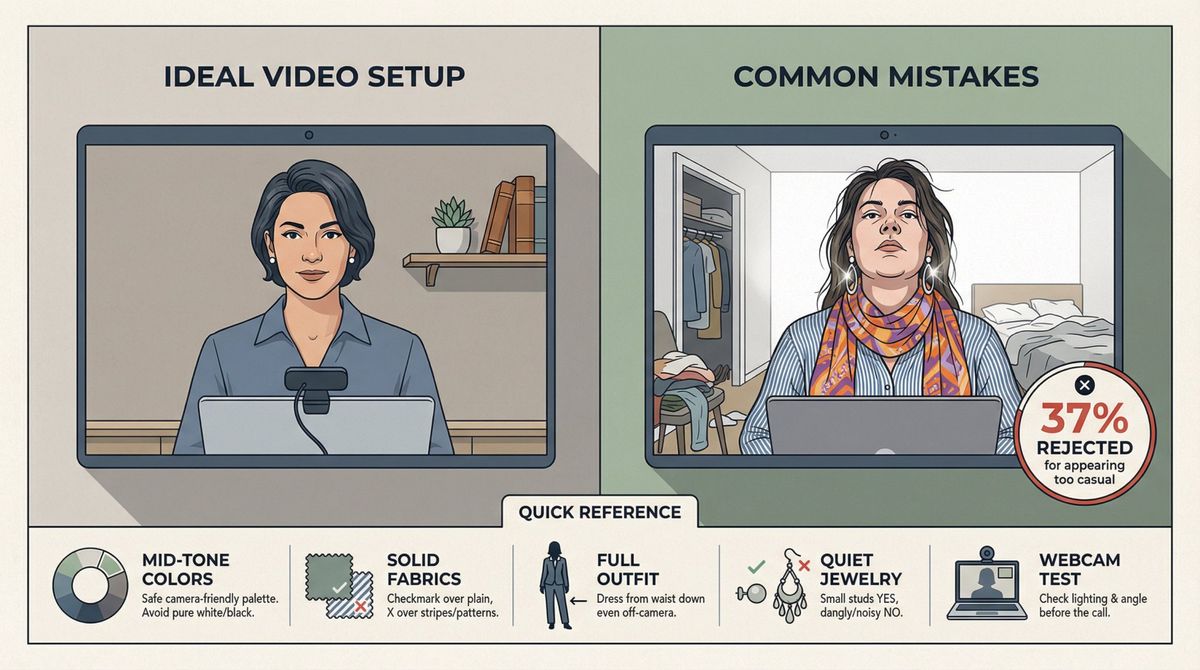
Video Interview Outfit Rules That Actually Matter
In the era of remote work, many interviews take place over Zoom, Microsoft Teams, or similar video platforms. You might be wondering: Does it really matter what I wear if I'm just a floating head on a screen?
Absolutely.
Virtual interview attire should be given the same consideration as in-person. One survey found that 37% of hiring managers said they've rejected candidates for appearing "too casual" in an interview, even virtual ones.
For more comprehensive guidance on virtual interviews, check out AIApply's virtual interview preparation guide.
① Pick "camera-friendly" colors
Choose mid-tones that contrast with your wall/background. Avoid pure white if your wall is also light. Avoid anything neon. Avoid all-white outfits (white can glare or "blow out" on camera under lighting) and avoid all-black (it can make you look like a flat silhouette).
② Avoid patterns that glitch
Fine stripes, tiny checks, and tight patterns can create a shimmer effect on camera. Also, avoid loud patterns or stripes. Busy designs can pixelate or be distracting on video. Solids or subtle patterns are safest.
③ Dress for the full frame
Even if the camera shows only your top half, wearing proper bottoms can change your posture and mindset.
④ Choose quiet accessories
If your jewelry clicks against a mic or reflects light, it becomes "the main character" on screen.
⑤ Do a webcam test
Open your camera, sit down, and see what your interviewer will see. Adjust the outfit, lighting, and angle.
For more tips on succeeding in virtual interviews, see AIApply's virtual interview tips.
Interview Outfit Details That Secretly Matter
These don't sound important, but they can be.
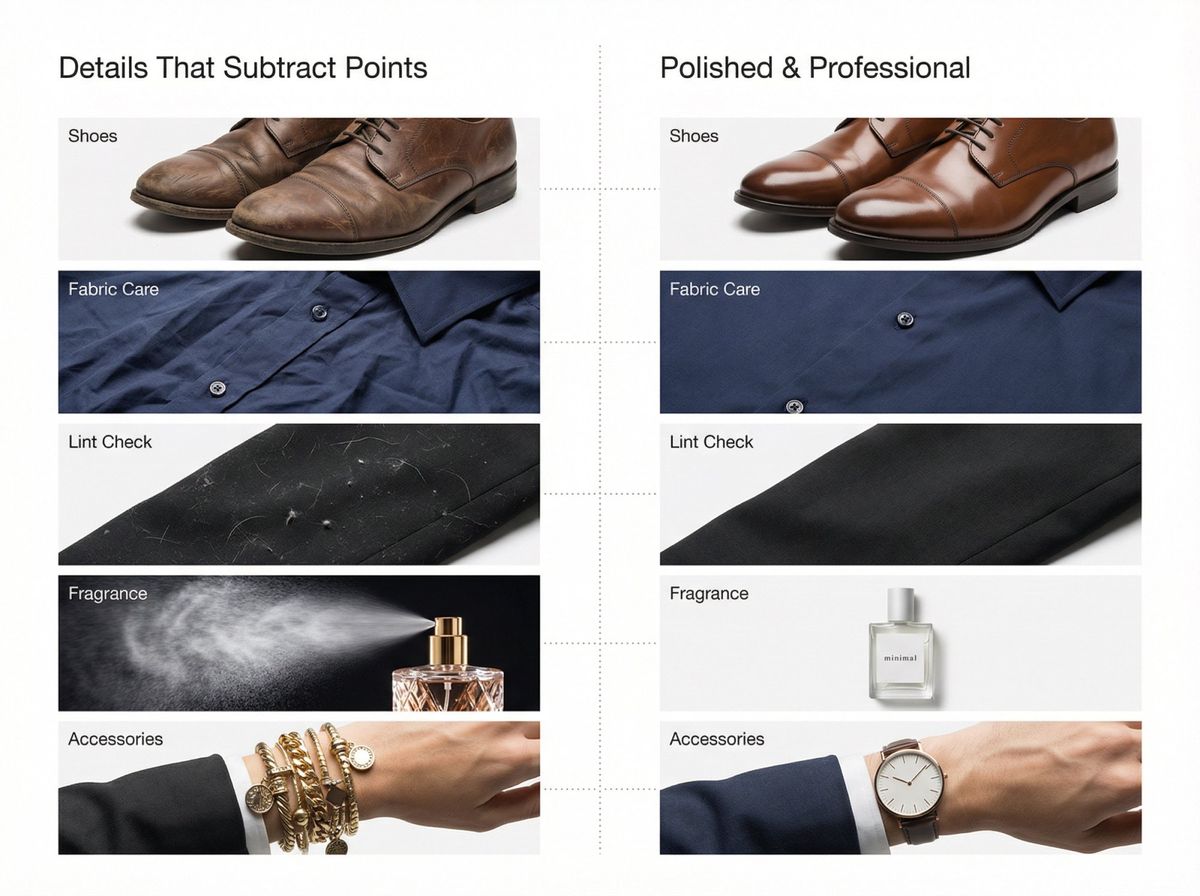
→ Shoes
Scuffed shoes can silently subtract points. Multiple guides explicitly call out cleaning shoes and avoiding scuffs.
→ Wrinkles
Wrinkles communicate "rushed," even if you're not. Press or steam your outfit.
→ Pet hair and lint
Check under bright light. Keep a lint roller in your bag.
→ Fragrance
Strong fragrance can distract or trigger allergies. Avoid it.
→ Noisy items
Chunky bangles, loud shoes, or clanky keys can make you feel awkward and distract you.
How to Perfect Your Interview Outfit: 8 Essential Tips
Now that we've covered specific dress scenarios, here's a handy list of general tips applicable to any interview attire:
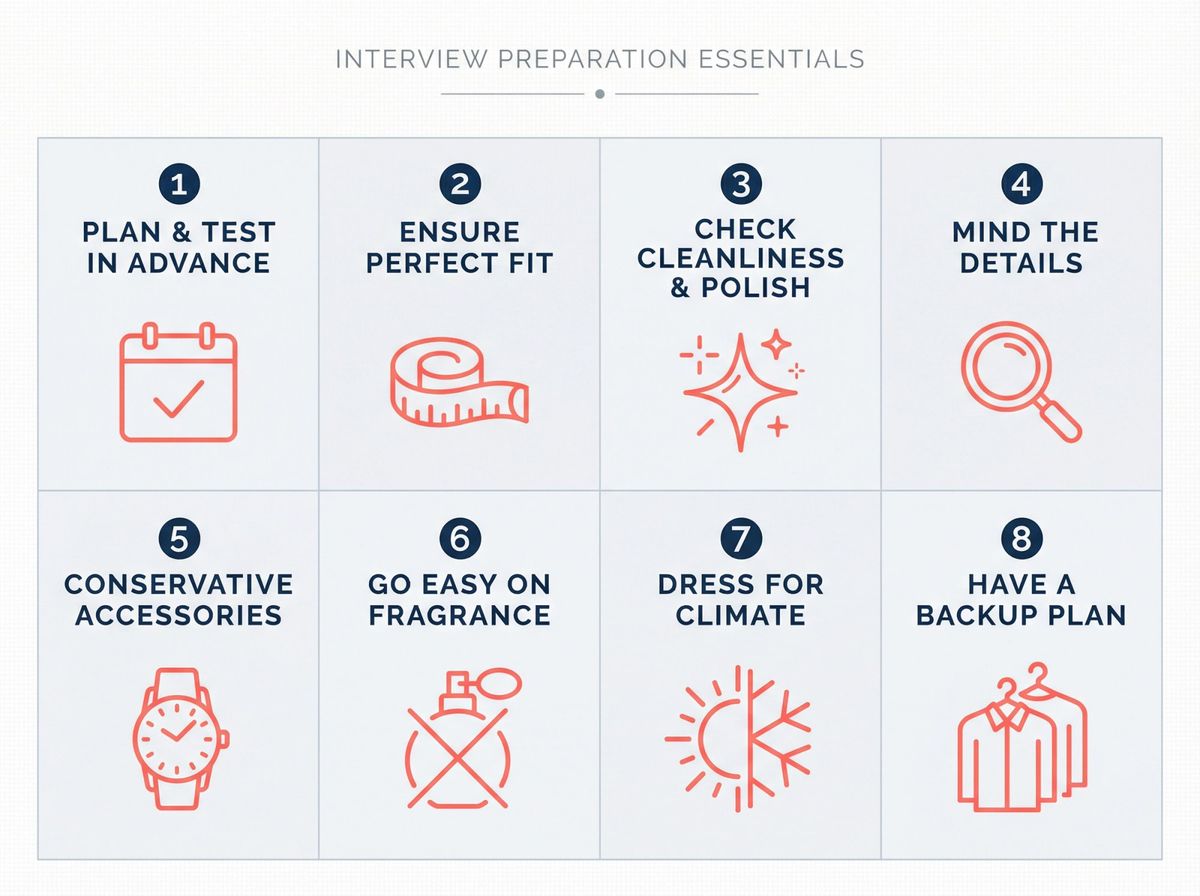
① Plan and test your outfit in advance
Don't wait until the morning of your interview to decide on clothes. Choose and try on your full outfit a day or two before. This way, you have time to iron out wrinkles, replace missing buttons, polish shoes, or swap an item if it's not working.
Lay everything out the night before for quick dressing. Do a "mirror test" or even take a selfie in the outfit to see how it looks.
② Make sure everything fits comfortably
An ill-fitting jacket that's too tight or pants that are too long can undermine an otherwise good outfit. Ensure you can sit, stand, and move comfortably in your clothes. If something is slightly baggy or long, consider a quick alteration.
Being comfortable in your attire helps you appear confident in an interview.
Pro tip: If you buy something new (shoes especially), break it in by wearing it a few times beforehand so you're not dealing with stiff fabric or blisters during the interview.
③ Check garments for cleanliness and polish
Your outfit should be freshly laundered or dry-cleaned, pressed or ironed, and free of stains or odors. Inspect for any surprise stains, and give everything a once-over with a lint roller (especially if you have pets).
Don't forget shoes. Wipe off any dirt and scuffs, and give dress shoes a quick polish. These small touches make a big difference in overall impression.
④ Mind the details
Pay attention to small details that complete a polished look. For example: remove any tags or stickers from new clothing. Make sure shirts are fully tucked in and buttons/buttonholes aligned.
If you're wearing a tie, use a simple knot and ensure the length hits near your belt line. If you carry a briefcase or portfolio, organize it neatly with copies of your résumé (consider using AIApply's AI Resume Builder to create a professional résumé), notepad, etc.
⑤ Keep accessories and grooming conservative
Follow the "less is more" principle: one or two pieces of jewelry max (e.g. a watch and small earrings). Avoid anything that jingles loudly or draws excessive attention.
Many employers today are perfectly fine with tattoos or piercings, but if you're unsure about the company's culture, you might choose to cover tattoos and use simple jewelry in piercings for the interview.
⑥ Go easy on fragrance
If you use perfume, cologne, or scented products, use a very light touch or none at all. A scent that is too strong can be distracting or even cause allergic reactions.
⑦ Dress for the climate and weather
Being practical will help you be comfortable. If it's a sweltering summer day and you have to walk five blocks to the interview site, a full wool suit might leave you drenched in sweat (consider a lighter fabric suit).
Conversely, in winter, ensure you have a warm coat appropriate for wearing over your interview clothes. Also, plan for rain or snow if the forecast calls for it.
⑧ Have a backup plan
Sometimes, despite our best planning, spills or accidents happen. On the morning of your interview, give yourself a little extra time just in case.
If you have a suitable second outfit, keep it ready. Or at least have an extra clean shirt/blouse on hand.
Final once-over
Right before you enter the interview (or join the video call), do a quick final check. If in person, duck into a restroom or use your phone camera: is your shirt still tucked, tie straight, no food in teeth, hair in place?
For video, check your webcam view one minute before: is the lighting okay, camera at eye level, nothing weird in frame?
What Not to Wear to a Job Interview
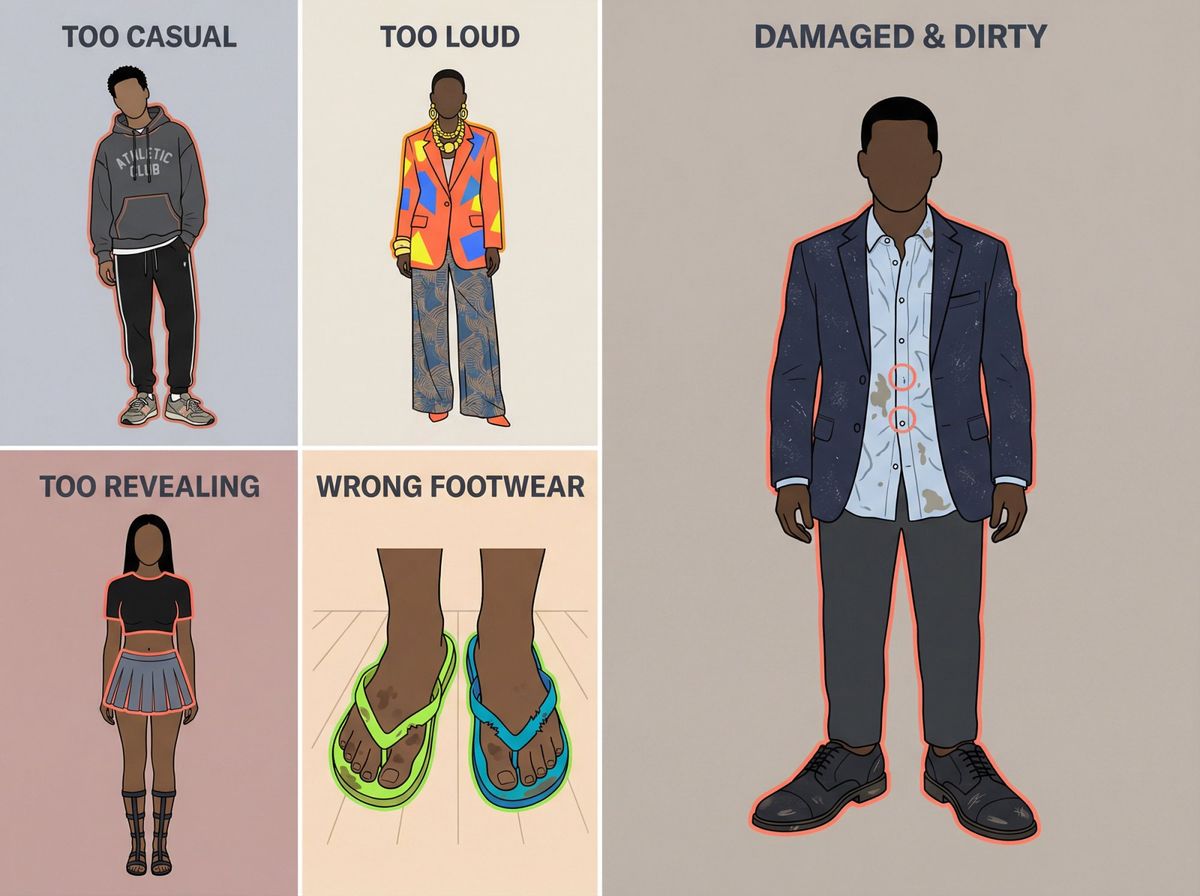
Here's the practical version of what to avoid.
| Avoid This | Why It's Problematic |
|---|---|
| Gym clothes, beachwear, heavily distressed clothing | Too casual for any professional context |
| Jeans (except dark jeans in verified smart casual settings) | Generally too casual; only acceptable in specific creative/startup contexts |
| T-shirts with logos or slogans | Unprofessional and distracting |
| Hoodies, athletic wear, sneakers | Signal lack of effort or awareness |
| Revealing, tight, or short clothing | Low-cut tops, very short skirts, midriff-showing items have no place in interviews |
| Loud prints, neon colors, clashing patterns | Too distracting; pulls focus from your qualifications |
| Excessive or jangly jewelry | Overwhelming and noisy |
| Strong perfume/cologne | Can trigger allergies or headaches |
| Flip-flops or open-toed sandals | Far too casual and potentially unsafe |
| Dirty, damaged, or wrinkled clothes | Signals lack of preparation and respect |
| Uncomfortable new shoes | Will affect your posture and confidence |
Avoid anything that is:
→ Too casual for the context
→ Too revealing or likely to shift/move while you sit and gesture
→ Too loud (huge logos, slogans, loud prints)
→ Too distracting (sparkly, reflective, jangly)
→ Too scented (strong perfume/cologne)
→ Too uncomfortable (new shoes that cause pain, itchy fabric)
Interview Outfit Strategies for Special Situations
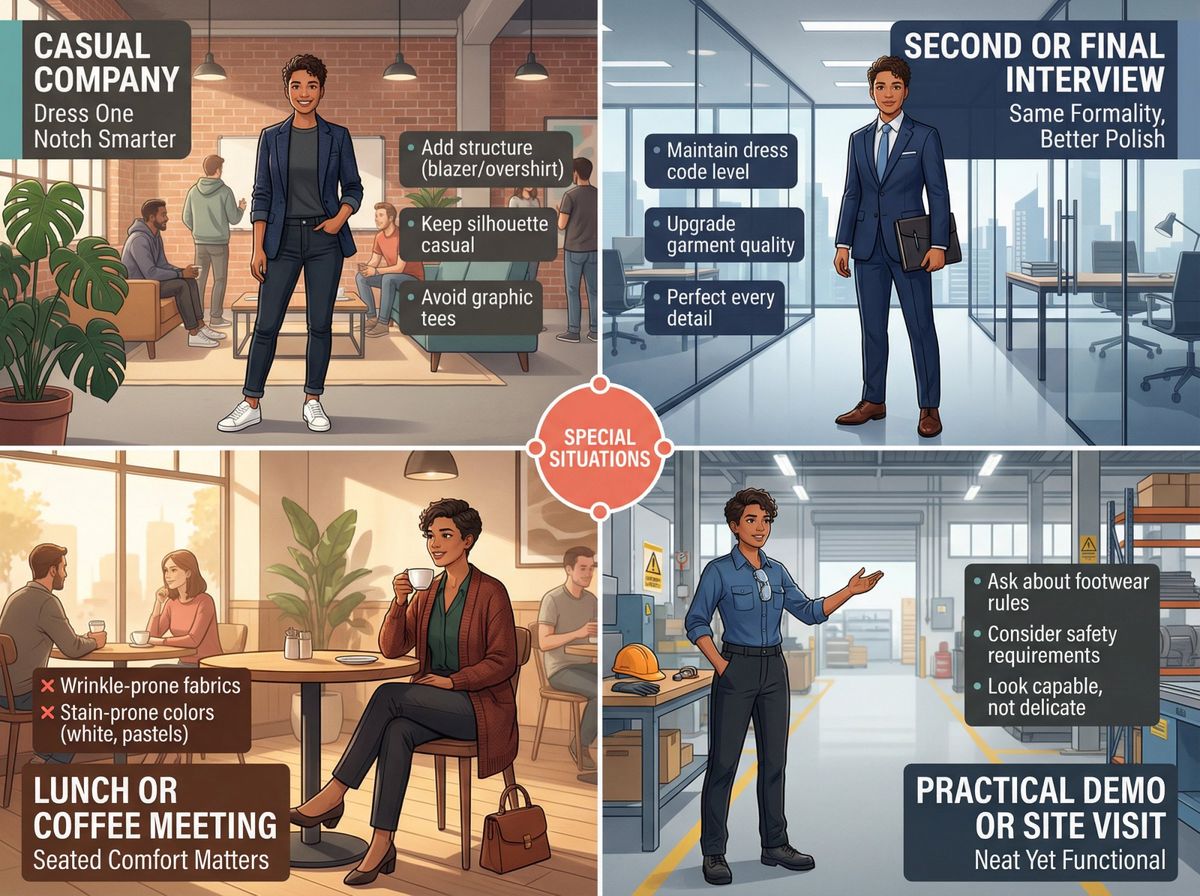
Interviewing at a "Casual" Company
Here's the trap: people hear "casual" and go too casual.
A better rule: dress one notch smarter than day-to-day.
So if their daily uniform is hoodies and trainers, keep the silhouette casual but add structure: a blazer, clean overshirt, structured jacket. Keep everything clean and fitted. Avoid graphic tees.
Second or Final Interview: What to Wear
Usually you keep the same formality level, but upgrade polish.
When you're preparing for your final interview, remember to choose an outfit that matches role level and culture.
Interview Over Lunch or Coffee
Choose an outfit that still looks good while seated, eating, and moving.
Avoid:
→ Anything that wrinkles instantly
→ Anything that stains easily (especially if you're anxious)
Interview with a Practical Demo or Site Visit
Ask about:
→ Footwear requirements
→ Safety equipment
→ Whether you'll be on the floor/warehouse/lab
Dress neat, but don't show up looking like you can't physically do the work.
How to Build an Interview Wardrobe on a Budget
You do not need luxury. You need clean, fitted, and appropriate.
Guidance stresses expensive clothing is not required and effort matters more.
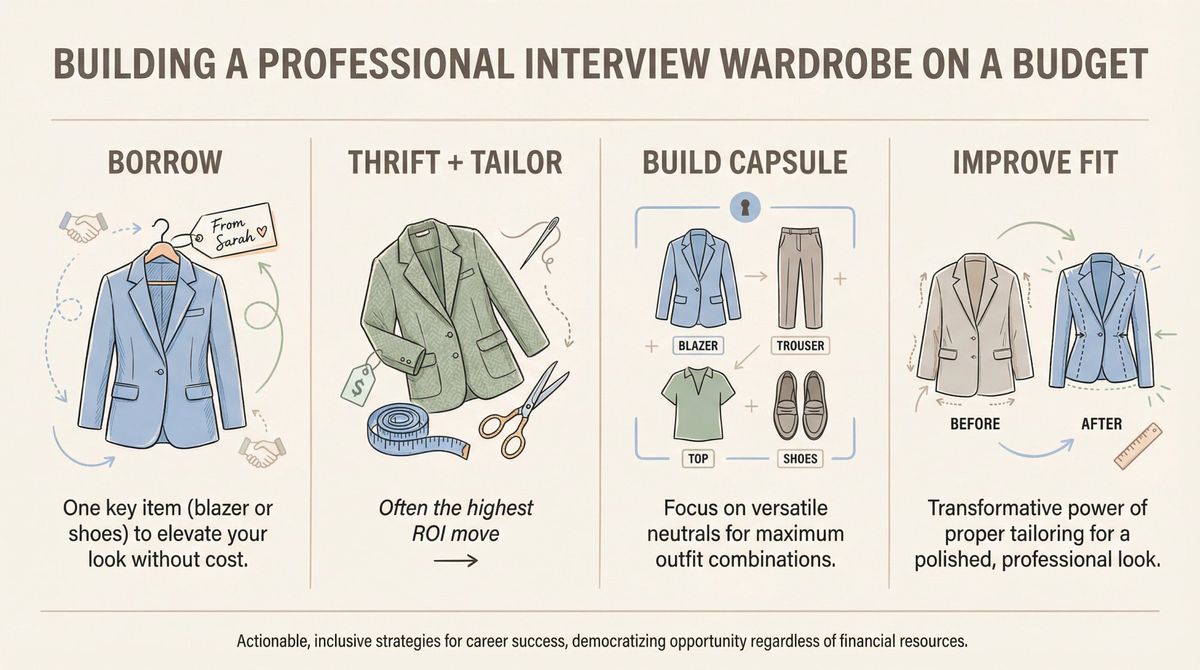
Fast options:
→ Borrow one key item (blazer or shoes)
→ Thrift a blazer and tailor it (often the highest ROI move)
→ Build a capsule set: one blazer, one trouser, one neutral top, one pair of shoes
If you can only improve one thing: improve fit.
Night-Before Interview Outfit Checklist
Do this the night before:
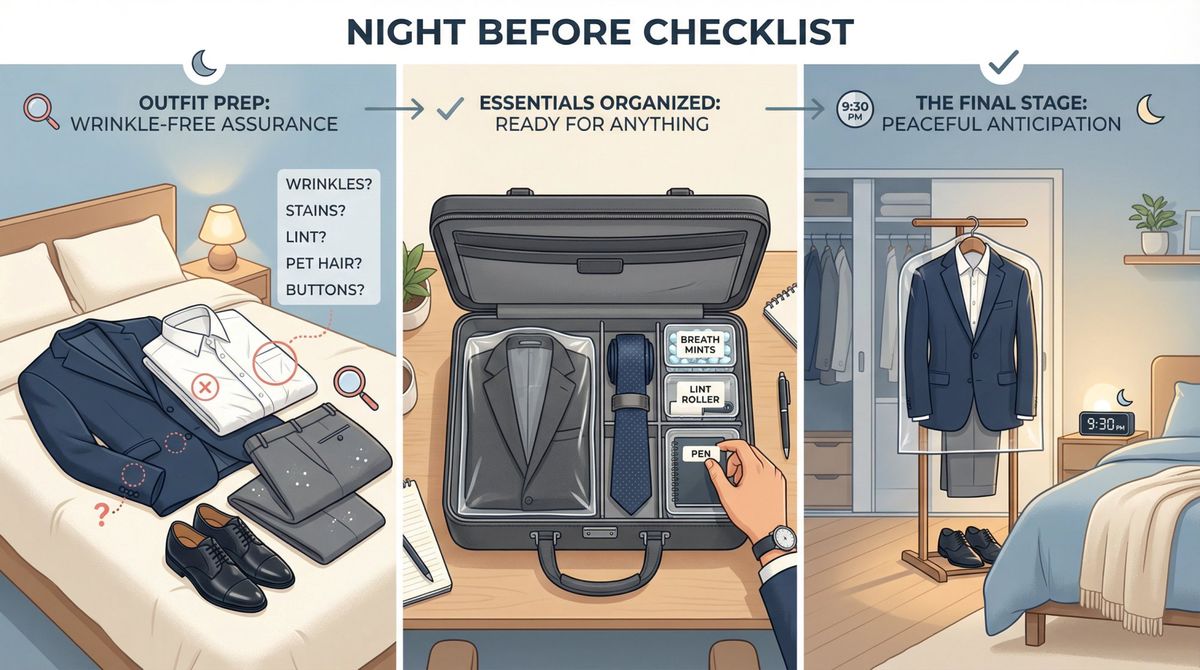
☐ Try the full outfit on
☐ Sit down in it (not just stand)
☐ Check: wrinkles, stains, lint, pet hair, missing buttons
☐ Put the backup item in your bag (tie, blazer, etc.)
☐ Put breath mints, lint roller, and a pen in your bag
☐ Set the outfit somewhere it won't get creased
10-Minute Pre-Interview Outfit Check
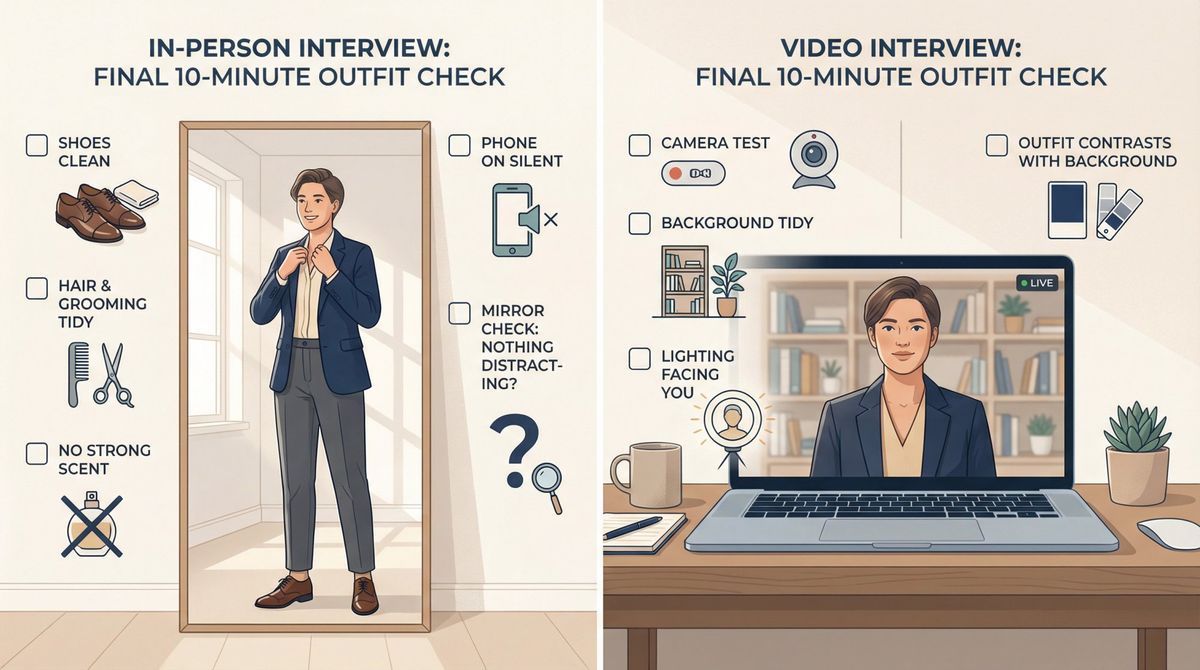
In-person checklist:
☐ Shoes clean
☐ Hair and grooming tidy
☐ No strong scent
☐ Phone on silent
☐ One last mirror check: "Would anything distract me if I were the interviewer?"
If you're on video:
☐ Camera test
☐ Background tidy
☐ Lighting facing you
☐ Outfit contrasts with background
How AIApply Helps Beyond the Outfit
Outfits are only one part of the interview signal. The other part is: do your answers, stories, and documents back up the impression you're creating?
If you want to tighten the whole pipeline:
→ Use AIApply's AI Mock Interview
Practice the exact role and get feedback before the real thing. The tool simulates real interview scenarios and helps you refine your answers until they're sharp.
→ Use Interview Answer Buddy for real-time coaching
Interview Answer Buddy provides on-screen coaching during interviews (especially useful when nerves spike). It's discreet, works on most video platforms, and gives you instant guidance when you need it most.
→ Prepare thoroughly for common interview questions
Practice your responses to common questions with AIApply's behavioral interview questions guide, situational interview questions guide, and entry-level interview prep.
For a comprehensive guide on interview prep, including smart answers and tips, see AIApply's Preparing for an Interview: Complete Success Guide.
Dress for Success and Land the Job
Choosing what to wear to a job interview comes down to presenting the best version of yourself.
When you dress well for an interview, you're not only showing respect to the interviewer. You're also boosting your own confidence. There's truth to the saying "dress for the job you want, not the job you have."
By aligning your appearance with the role and company, you help the interviewer visualize you in that position. You want them to easily picture you representing the team, whether that's meeting clients in a sharp suit or brainstorming in the conference room in smart-casual attire.
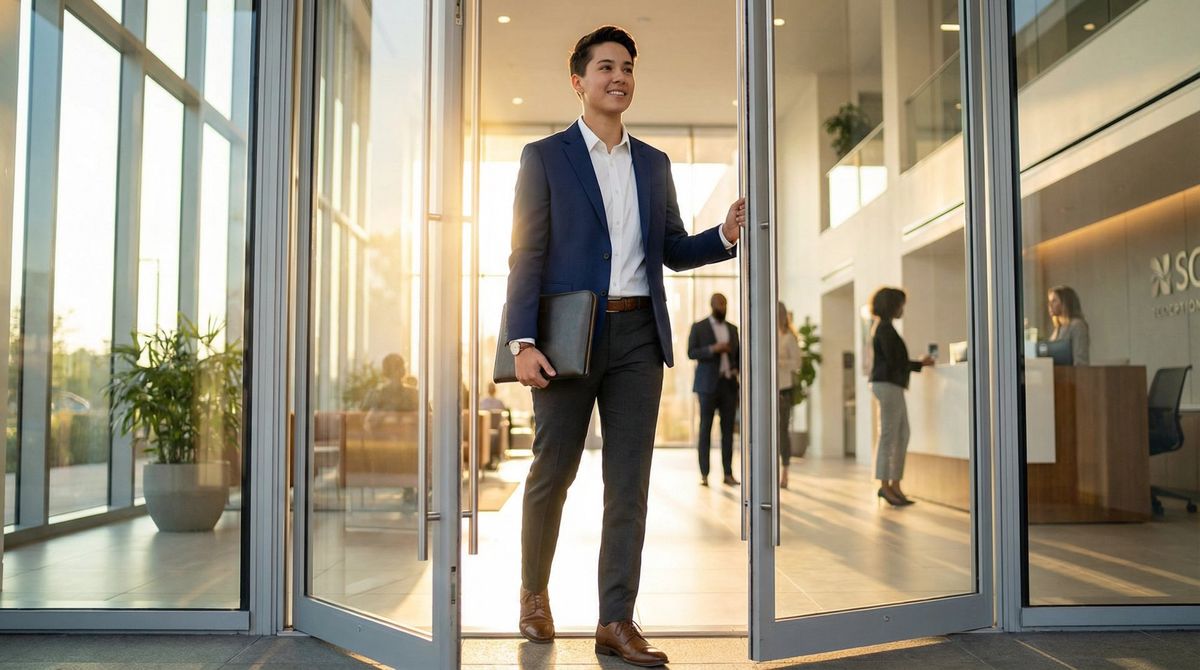
A great interview outfit won't get you the job on its own (you still need to deliver strong answers and demonstrate your skills). But it sets the stage for a successful conversation. It takes one worry off your plate so you can focus on being confident and connecting with the interviewer.
As soon as you walk in, your attire should silently communicate: "I'm serious about this opportunity, I understand your world, and I fit in here." That positive first impression can then be reinforced by your qualifications and enthusiasm.
Before we wrap up, remember that authenticity matters too. Within the bounds of professionalism, wear clothes that make you feel like you. If you feel awkward or unlike yourself in an outfit, it may come across in your body language. So find that sweet spot between company-appropriate and self-expression.
Feeling good in your clothes helps you project confidence in the interview.
In summary: Dress for success so that your first impression is a strong one, but also prepare and bring your A-game to the conversation. When you look the part and bring the substance, you become a truly compelling candidate.
Good luck with your interview. With the right outfit and preparation, you'll walk in ready to impress from the first handshake (or first Zoom wave) to the last thank-you and goodbye.
You've got this. Dress well, be confident, and let your skills shine.
After the interview, don't forget to follow up! Send a thoughtful thank you message using AIApply's interview follow-up message guide and best follow-up email after interview examples to leave a lasting positive impression.
Frequently Asked Questions
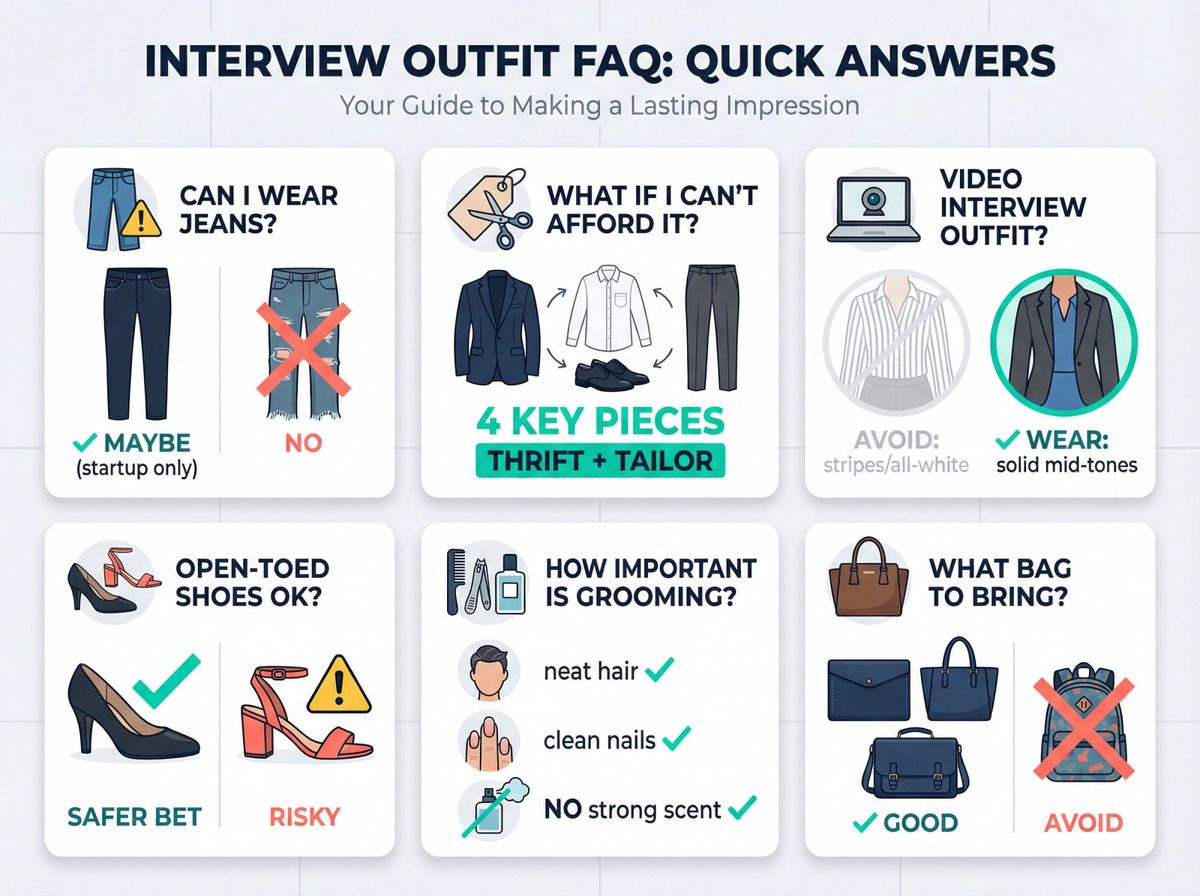
Can I wear jeans to a job interview?
Generally, no. Jeans are too casual for most interviews, even in relaxed industries. The only exception is if you're interviewing at a very casual startup or creative agency and you're certain dark, clean jeans (no rips or fading) are part of their culture. Even then, pair them with a blazer and polished shoes to elevate the look. When in doubt, skip the jeans.
What if I can't afford professional interview clothes?
You don't need expensive clothing. Focus on clean, well-fitting basics. Consider borrowing a blazer from a friend, thrifting and tailoring one key piece, or building a minimal capsule (one blazer, one neutral top, one pair of trousers, one pair of shoes). Many organizations also offer free professional clothing for job seekers. Check local nonprofits or career centers.
Should I dress the same for a video interview as an in-person interview?
Yes, but with video-specific adjustments. Choose the same formality level, but avoid patterns that glitch on camera (fine stripes, tight checks) and colors that clash with your background. Also avoid all-white or all-black outfits. Test your outfit on camera before the interview to ensure it looks professional on screen. For more guidance, check out AIApply's virtual interview preparation guide.
Is it okay to wear open-toed shoes to an interview?
It's risky. Closed-toe shoes are the safer choice for most interviews. While some modern offices accept open-toed shoes, many interviewers still consider them too casual or unprofessional for an interview setting. If you're interviewing in a very casual environment and it's summer, you might get away with dressy sandals, but closed-toe is always the safer bet.
What should I do if I'm overdressed for the interview?
If you arrive and realize everyone's more casual than you expected, don't panic. You can remove a blazer, loosen a tie, or roll up sleeves if appropriate. Being slightly overdressed is much better than being underdressed. It shows you took the interview seriously. Nobody will fault you for putting in extra effort.
How important is grooming compared to clothing?
Very important. Even the best outfit can't overcome poor grooming. Make sure your hair is neat, nails are clean, teeth are brushed, and you've showered recently. Avoid strong fragrances. Think of grooming as the foundation that makes your outfit work. Both need to be on point.
Can I wear my hair in a natural style or should I straighten/style it formally?
Wear your hair in a clean, professional style that makes you feel confident and authentic. Natural hairstyles, locs, braids, and textured hair are all professional. The key is that your hair looks intentional and well-maintained, not that it conforms to one specific standard. Focus on neatness and confidence.
What if the company says "dress casually" for the interview?
"Dress casually" for an interview still means business casual or smart casual, not weekend casual. Think clean chinos or dress pants with a nice top and optional blazer, not jeans and a hoodie. Remember the "dress one notch above" rule. Even if they say casual, they still expect you to show you're taking the interview seriously.
Should I wear makeup to an interview?
That's entirely your choice. If you normally wear makeup, wear what makes you feel confident and professional. Keep it natural and understated for interviews. If you don't typically wear makeup, there's no need to start for an interview. The key is looking polished and put-together in whatever way feels authentic to you.
What about religious or cultural dress requirements?
Absolutely honor your religious or cultural dress requirements. Professional attire can and should accommodate head coverings, modest dress, cultural garments, and religious jewelry. These are part of your identity and protected by law in most places. Focus on ensuring whatever you wear is clean, well-fitted, and presented with confidence.
Can I wear a smartwatch or fitness tracker?
A simple, professional-looking smartwatch (like an Apple Watch with a classic band) is generally fine and increasingly common. But fitness trackers (especially bright colorful ones) can look too casual. If you do wear a smartwatch, silence all notifications before the interview so it doesn't buzz or light up during the conversation.
What if I have visible tattoos or piercings?
This depends on the company culture and industry. Conservative industries (finance, law) may still have reservations, while creative and tech fields are usually more accepting. If you're unsure, you can choose to cover tattoos and remove extra piercings for the interview, then gauge the culture during your visit. Many modern employers don't care about tattoos or piercings as long as you're otherwise professional.
Should I bring a bag or briefcase to the interview?
Yes, bring something professional to carry your résumé copies (optimized with AIApply's Resume Scanner), portfolio, notepad, and pen. A simple leather portfolio, professional tote, structured messenger bag, or slim briefcase all work. Avoid backpacks unless they're very professional-looking (and even then, a portfolio is better). Skip anything too large, too casual, or covered in logos.
What if I'm interviewing in a different climate than I'm used to?
Plan ahead for weather. If you're traveling somewhere warmer, choose lighter fabrics and pack a separate layer you can remove. For colder climates, bring appropriate outerwear but don't let it distract from your interview outfit. Always check the forecast and bring an umbrella if rain is possible. Arriving soaked or sweating will hurt your first impression.
How should I handle the interview outfit if I'm coming from another job?
If possible, change into your interview outfit before you arrive. Keep it in your car or in a nearby restroom if needed. If you can't change, choose an outfit that works for both settings or dress up your work outfit with a blazer and better shoes. Pack a lint roller, breath mints, and a comb for a quick refresh before you go in.