One Page vs Two Page Resume: 2026 Guide
One page or two page resume? Get the answer in 60 seconds with hiring manager data, ATS insights, and examples for every career stage.


If you're stuck between a one-page resume and a two-page resume, you're not actually asking about page count.
You're asking:
"What length gets me interviews fastest without getting me silently judged?"
"How do I fit the right keywords and proof without creating a wall of text?"
"Will ATS reject me if I go to page 2?"
This guide answers those questions with a simple truth: resume length isn't a rule. It's a tradeoff between signal per second for humans and clarity for machines.
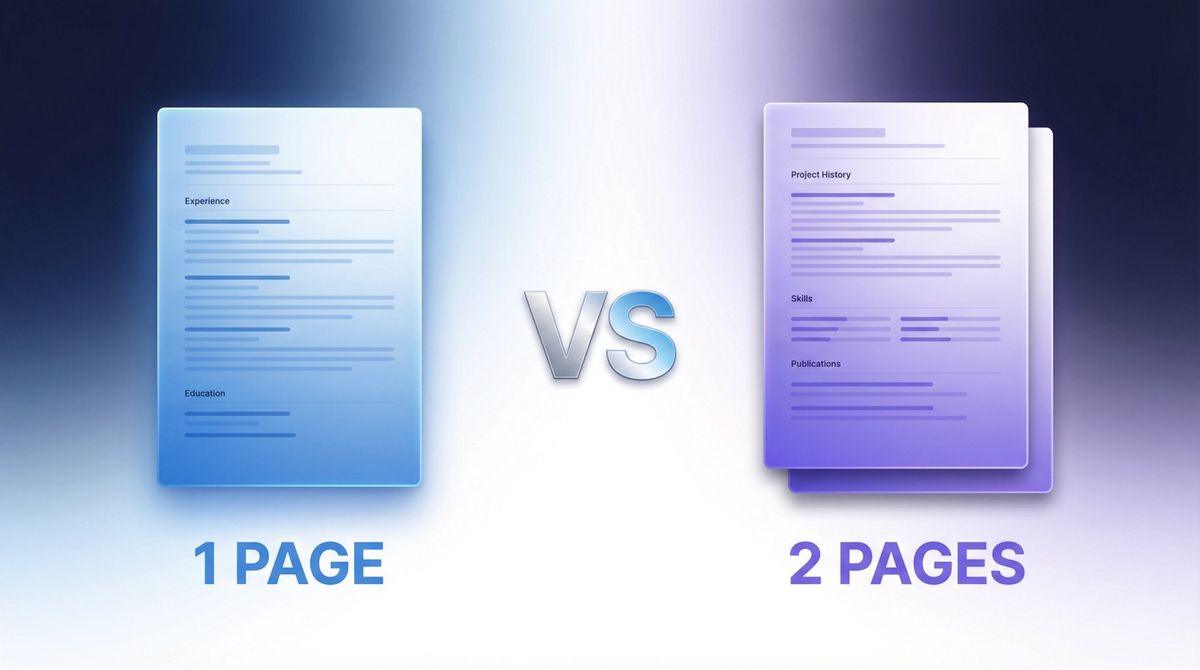
How to Choose Resume Length in 60 Seconds
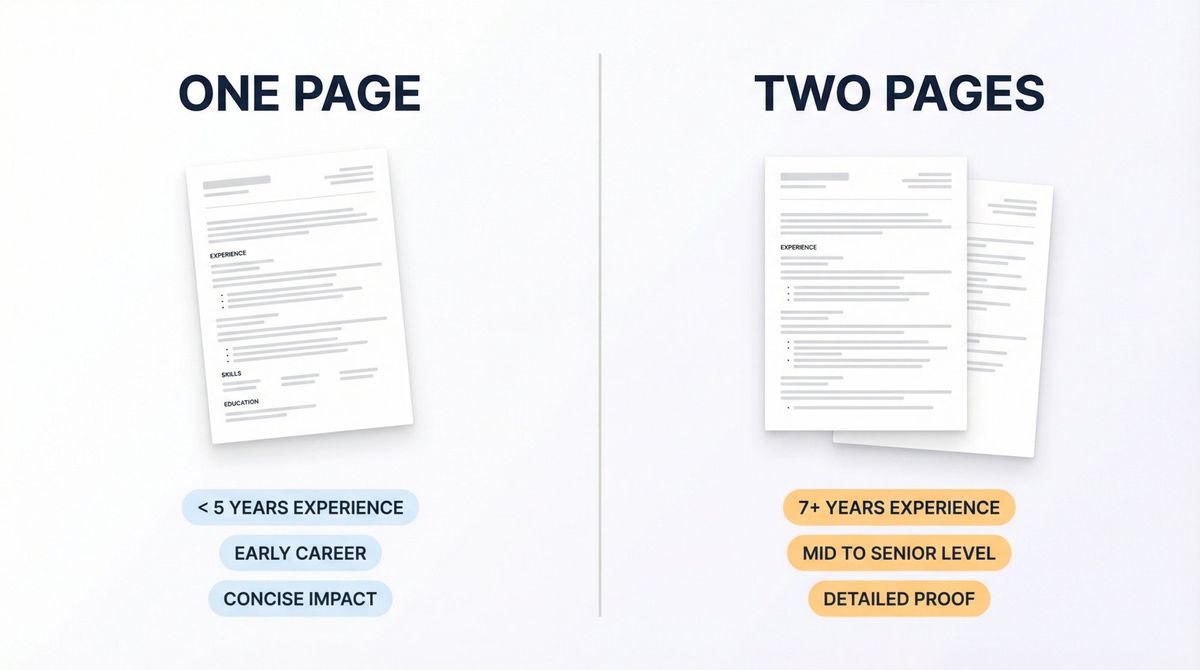
Here's when each format works best:
| Situation | Use One Page | Use Two Pages |
|---|---|---|
| Experience Level | < 5 years relevant experience | 7+ years with substantial achievements |
| Career Stage | Student, new grad, career changer | Mid-level, senior, technical roles |
| Content Depth | Can show impact without fluff | Need space for projects, metrics, leadership |
| Regional Norms | US early-career standard | UK CV norm, US experienced professionals |
| Special Cases | MBA applications (if specified) | Federal jobs (USAJobs 2-page max) |
Hard rules that override everything:
• Follow employer instructions. If they say "one page max," do it.
• US federal hiring: As of September 27, 2025, USAJobs enforces a strict 2-page resume limit for most listings.
• Commit to 1 or 2 pages. Harvard Business School advises: don't do 1 and ¼ pages.
Why Resume Length Rules Changed in 2026
Resumes Are Getting Longer (On Average)
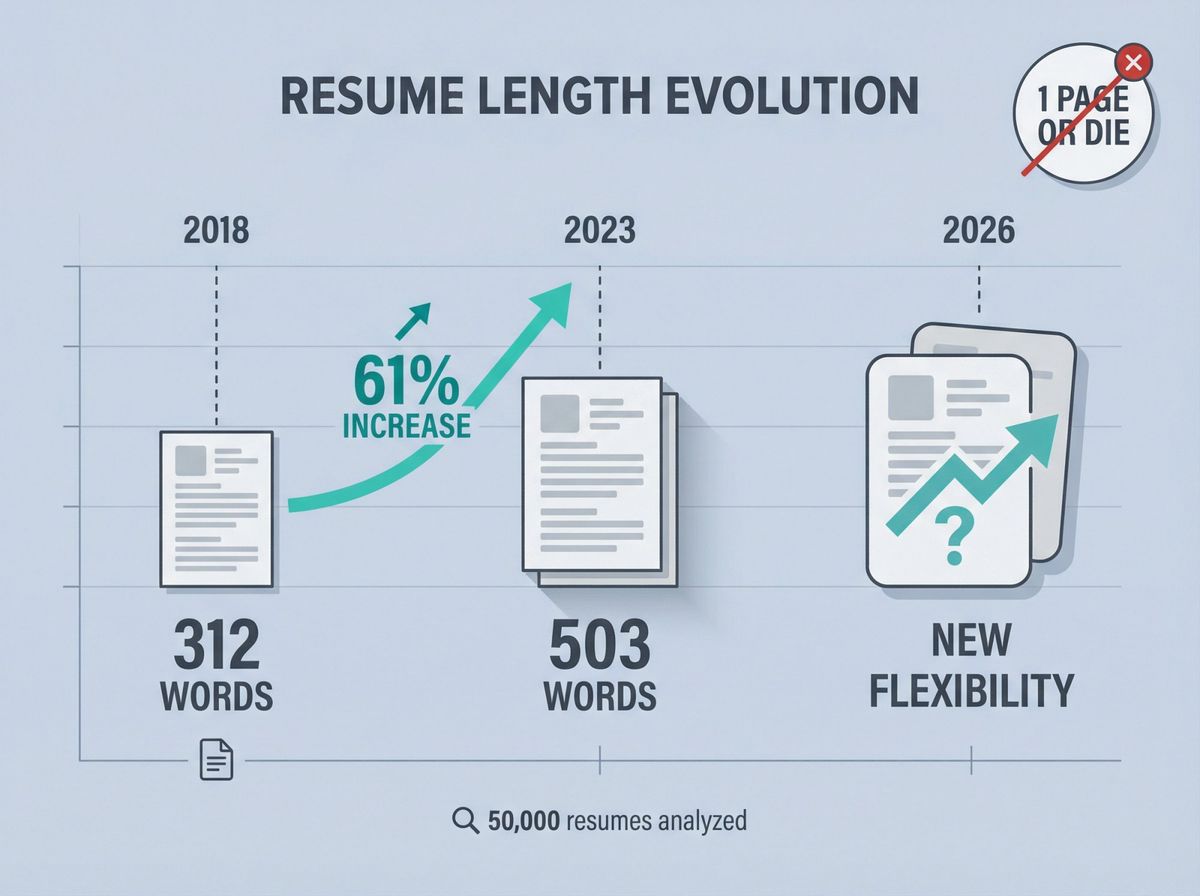
Research comparing 50,000 resumes from 2018 vs 2023 found average length rose from about 312 words to 503 words. That's equivalent to almost two pages.
This doesn't mean "everyone should go two pages." It means the old internet meme "1 page or die" is no longer reality for many roles.
Humans Still Decide (ATS Doesn't Count Pages)
Modern ATS systems focus on keywords and structure, not length.
Translation: Page count is mostly about human reading behavior and perceived signal, not about a robot rejecting you for having page 2.
Why Resume Length Actually Matters
Think of a resume like a movie trailer, not the full film.
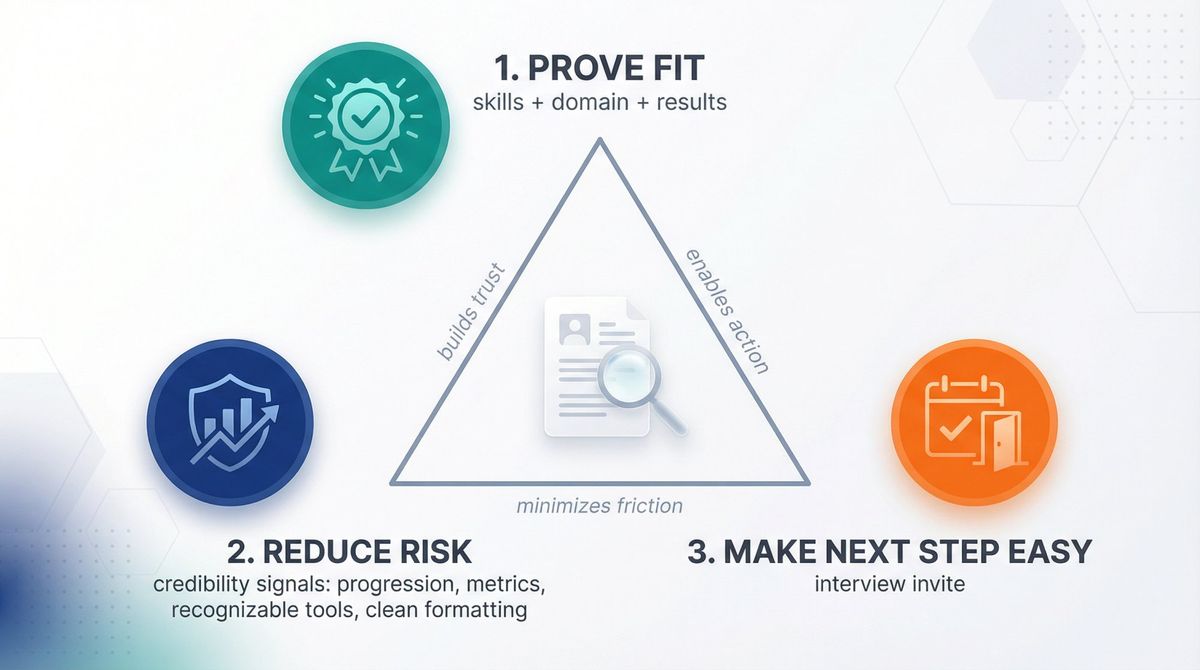
Your resume has three jobs:
1. Prove fit (skills + domain + results)
2. Reduce risk (credibility signals: progression, metrics, recognizable tools, clean formatting)
3. Make the next step easy (interview invite)
Page length matters only because:
• Humans skim and need clean information architecture
• Too short can look thin (no proof)
• Too long can look unfocused (no judgment)
A good rule: The reader should be able to answer "should I interview this person?" from page 1 alone. Page 2 is supporting evidence, not a dumping ground.
When to Use One Page vs Two Page Resume
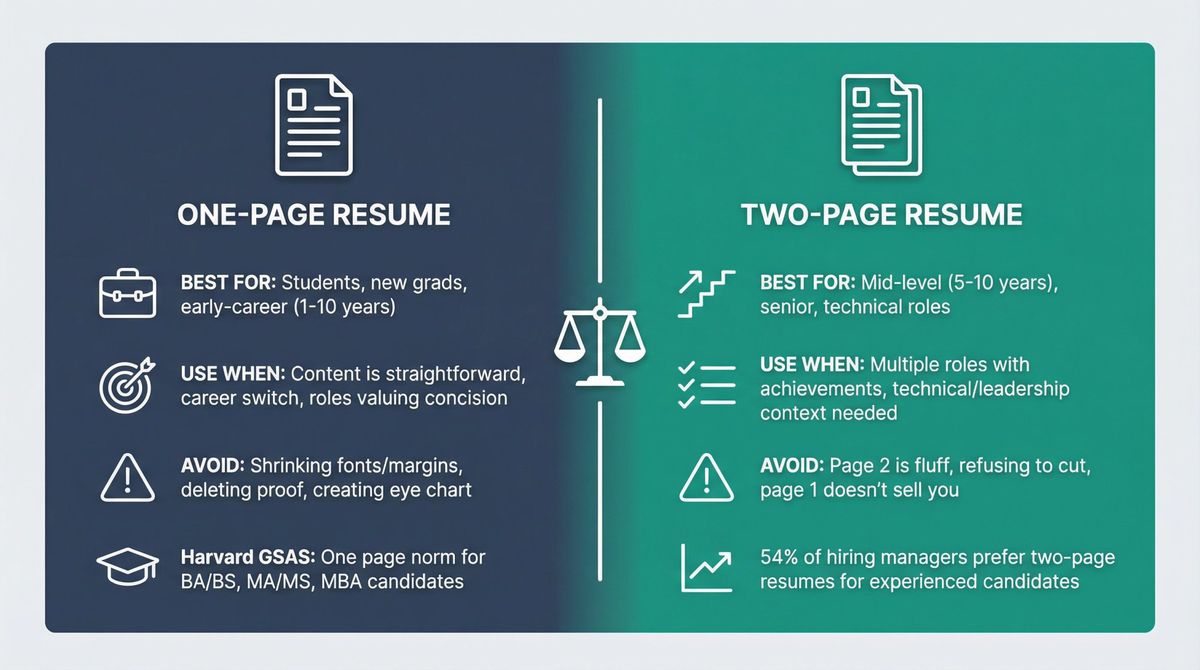
| One-Page Resume | Two-Page Resume |
|---|---|
| Best for: Students, new grads, early-career (1-10 years) | Best for: Mid-level (5-10 years), senior, technical roles |
| Use when: Content is straightforward, making a career switch, applying to roles valuing concision | Use when: Multiple relevant roles with real achievements, technical/leadership roles needing context |
| Avoid when: Forcing it by shrinking fonts/margins, deleting only real proof, creating an "eye chart" | Avoid when: Page 2 is fluff, refuse to cut anything, page 1 doesn't already sell you |
| Typical scenario: Harvard's GSAS guide states one page is the norm for BA/BS, MA/MS, and MBA candidates | Typical scenario: Modern hiring data shows 54% of hiring managers prefer two-page resumes for experienced candidates |
One-Page Resume: When It Works Best
Harvard's GSAS resume guide is blunt:
For BA/BS, MA/MS, and MBA candidates, a one-page resume is the norm; two pages can be acceptable if you're advanced in your career or have a PhD.
This echoes industry standards: one page is ideal especially for students, new grads, and professionals with 1-10 years, while acknowledging two pages can be fine if the content is strong.
Two-Page Resume: When Hiring Managers Prefer It
Modern hiring data shows 54% of hiring managers prefer two-page resumes. The preference holds across generations and company sizes.
That doesn't mean "always do 2 pages." It means a well-built two-pager is now widely acceptable (and often preferred).
Resume vs CV: Regional Differences That Matter
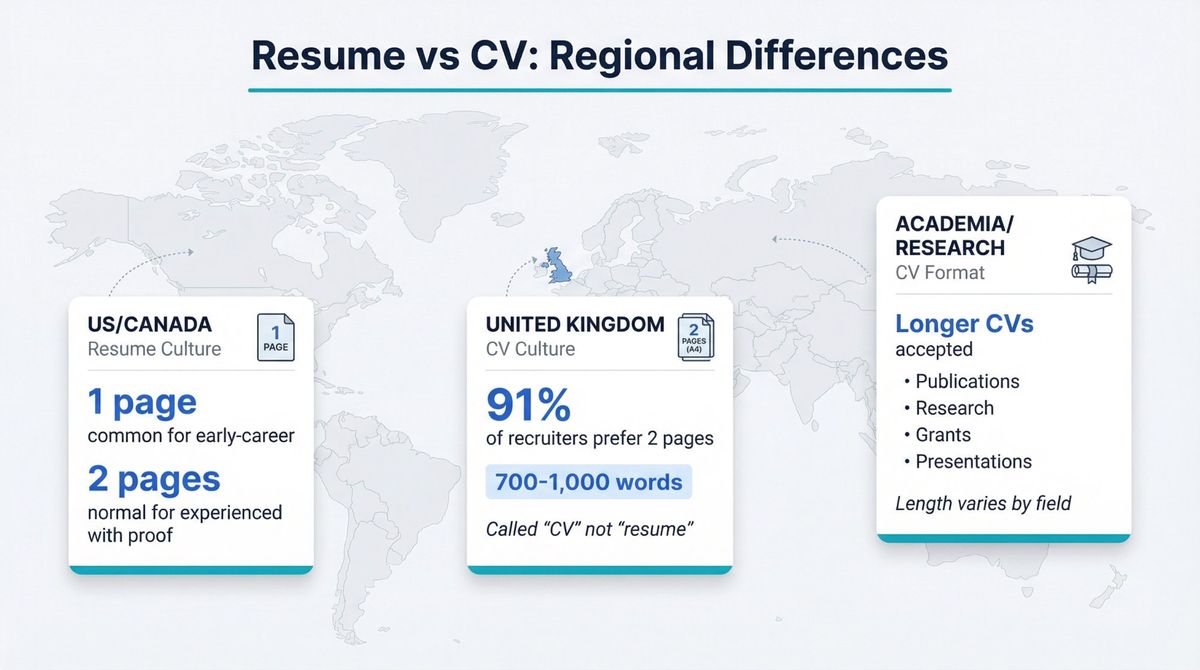
US/Canada (Resume Culture)
→ One page is common for early-career
→ Two pages is normal for experienced candidates when it adds real proof
UK (CV Culture)
In the UK, candidates typically submit a CV, and two pages is a very common norm.
Prospects advises keeping your CV no longer than two sides of A4.
Research claims 91% of recruiters say two pages is ideal, with many two-page CVs running about 700-1,000 words.
My take: If you're applying in the UK and you're not a student/new grad, a clean two-page CV often reads "normal," not "long."
Academia/Research (CV is Different)
A CV can run longer because it includes publications, research, grants, and presentations. Harvard Business School notes CVs are typically longer because they include research/publications sections.
USAJobs Federal Resume Rules Changed in 2025
This is one of the biggest "resume length" updates in years.
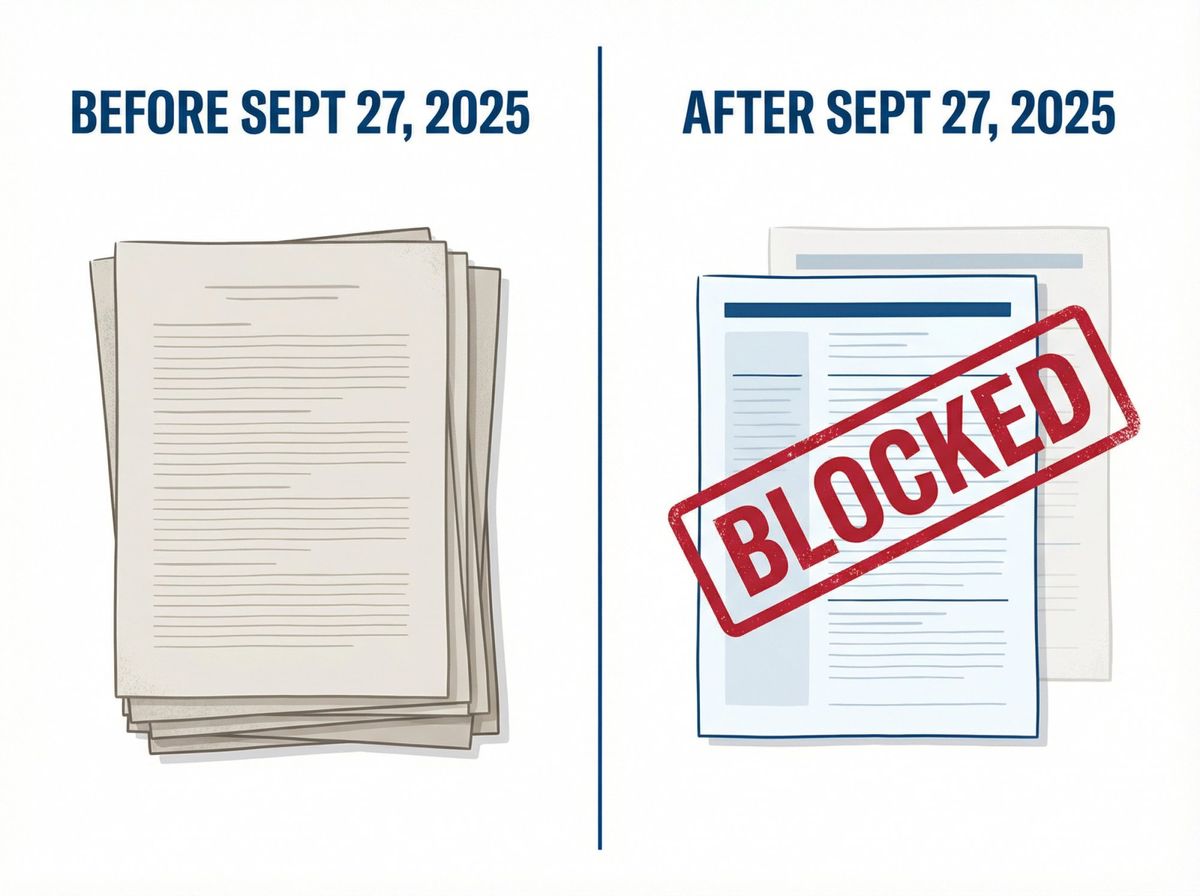
USAJobs states that starting September 27, 2025, the system won't allow a resume longer than two pages and applicants must edit to meet the new limit.
OPM's supporting guidance explains the implementation with practical formatting recommendations (margins, readable fonts, etc.).
So if you're applying to U.S. federal roles: Do not build a 4-5 page federal resume and assume it's fine. The platform may block it now.
How to Decide: Stop Overthinking in 3 Minutes
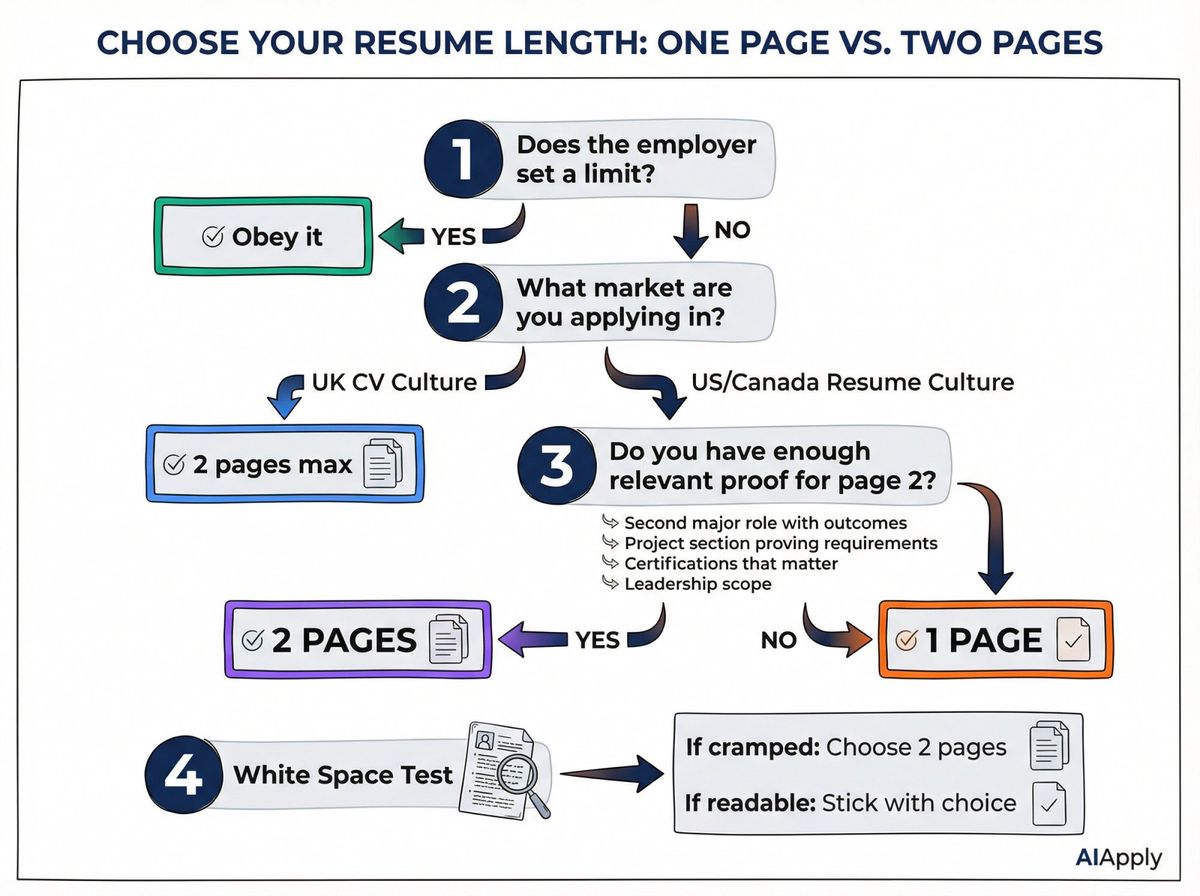
Answer these in order:
Step 1: Does the Employer Set a Limit?
• Yes → Obey it
• No → Go to step 2
Step 2: What Market Are You Applying In?
• UK CV culture → Default to 2 pages max unless you're early-career
• US/Canada resume culture → Step 3
Step 3: Do You Have Enough Relevant Proof to Justify Page 2?
Page 2 is justified if it adds at least one of these:
• A second major relevant role with measurable outcomes
• A project section that proves the exact job's requirements
• Certifications/licenses that matter (security, cloud, finance, healthcare)
• Leadership scope (team size, budget, scale)
If not, stay one page.
Step 4: Sanity Check with the "White Space Test"
If your one-page resume requires:
• Tiny font
• Tight margins
• Long paragraphs
• 8-10 bullets per job
...you're not "disciplined," you're just making it harder to read.
In that case: Two pages will likely perform better (because clarity beats compression).
How to Write a One-Page Resume Without Looking Inexperienced
This is the part most people mess up: they cut the wrong stuff.
The One-Page Compression Playbook
① Keep the most recent 1-3 relevant roles "high detail"
Older roles get 1 line each or a compressed "additional experience" section. Standard guidance suggests limiting how far back you go (often about 15 years) to keep things focused.
② Replace responsibilities with outcomes
"Responsible for..." is space-wasting. Use: action + scope + metric + result.
③ Make skills smaller, smarter
Stop listing 30 tools. Group into 3-4 clusters:
• Languages: Python, SQL, JavaScript
• Data/BI: Tableau, Power BI, Looker
• Cloud/DevOps: AWS, Docker, Kubernetes
④ Drop weak sections
Ditch:
• Objective statements (unless you're a career changer and it's sharp)
• Generic soft skills (unless proven with results)
• Hobbies (unless relevant)
⑤ Tight formatting (not tiny formatting)
Harvard GSAS recommends 10-12pt font and margins at least 0.75 inch, and discourages heavy templates/text boxes/colors that complicate readability/parsing.
Standard advice also suggests 10-12pt fonts and experimenting with margins in the 0.5-1 inch range depending on density.
How to Write a Two-Page Resume That Doesn't Feel Like a Novel
Two pages isn't permission to paste your LinkedIn.
It's permission to be specific.
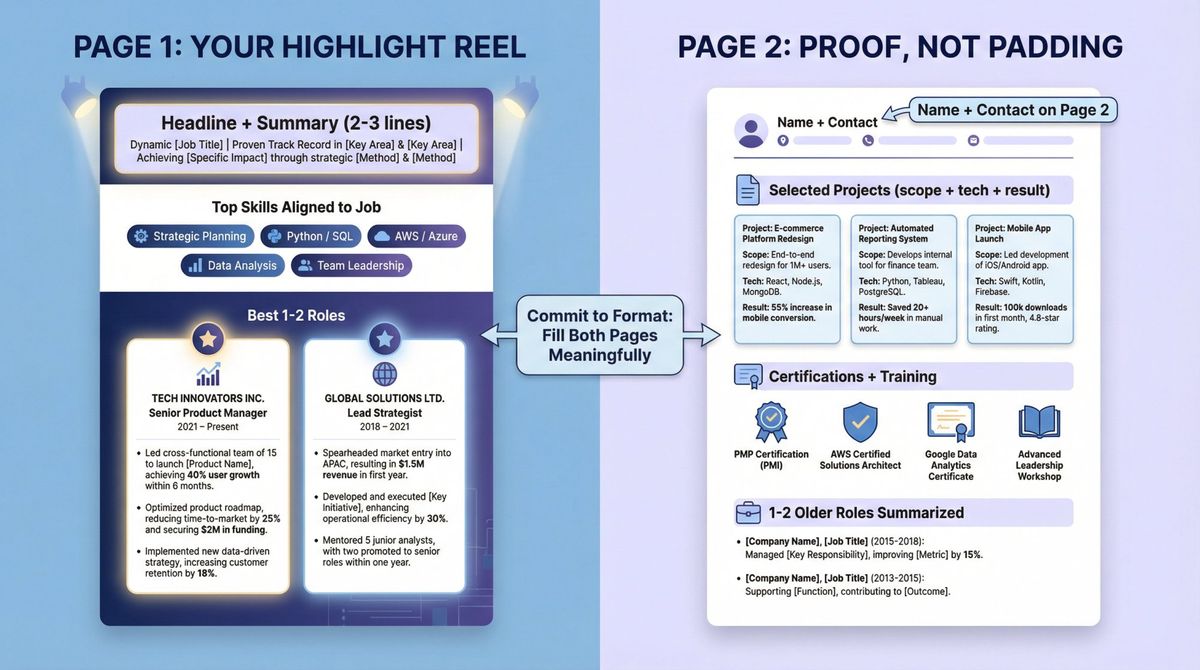
The Two-Page Expansion Playbook
① Page 1 = Your Highlight Reel
Page 1 should include:
• Headline + summary (2-3 lines)
• Top skills aligned to the job
• Your best 1-2 roles with your best metrics
② Page 2 = Proof, Not Padding
Great page-2 content:
• "Selected Projects" with scope + tech + result
• Certifications + relevant training
• 1-2 older roles summarized for credibility
③ Commit to the Format
Limit to one or two pages, but not one and ¼. If you need the second page, fill it with meaningful content and balance both pages.
④ Keep the Reader Oriented
If you go two pages, put your name/contact on page 2 (Stanford GSB explicitly recommends this so pages don't get separated).
What ATS Actually Cares About (Not Page Count)
Myth: "ATS Rejects Two-Page Resumes"
Modern ATS systems say resume length doesn't matter for ATS; ATS focuses on keywords and structure.
What Actually Matters for ATS + Humans
• Simple layout (single column, normal headings)
• No tables/text boxes for key info
• Keywords from the job description used naturally
• Consistent dates + titles
Our resume-format guidance emphasizes the same "ATS-safe" basics: single-column layouts, standard headings, no tables/text boxes/graphics for critical text, and making sure keywords appear naturally.
How to Use AI Without Sounding Like AI in 2026
Recent research found:
• 53% of hiring managers dislike AI-generated resumes
• 20% see them as a critical concern
That's a big deal for anyone using AI tools. The fix is simple:
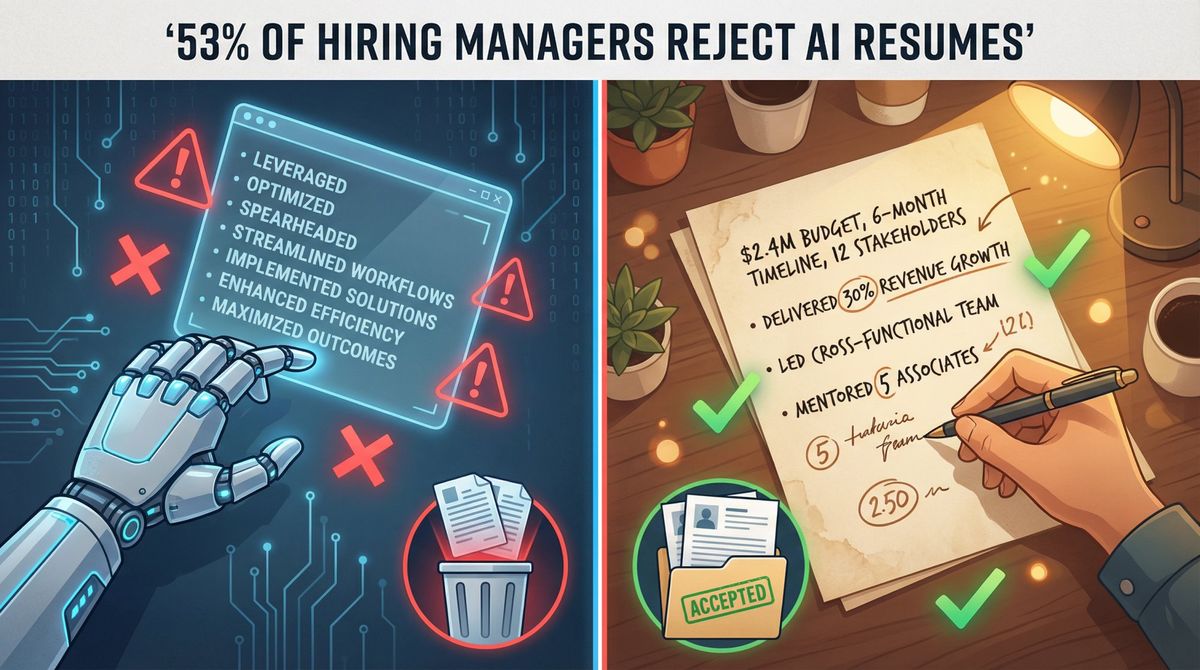
How to Use AI Without Sounding Like AI
• Make AI write drafts, not your final voice
• Replace vague verbs ("leveraged," "optimized," "spearheaded") with concrete actions
• Inject real constraints: time, budget, scale, stakeholders
• Add metrics wherever possible
• Read it out loud: if it sounds like a press release, rewrite it
AI should increase signal, not increase fluff.
How to Build Both Resume Versions Inside AIApply
The fastest way to win is to stop treating "one page vs two page" as a single irreversible decision.
You should have:
• A 1-page networking version (fast scan, referrals, LinkedIn outreach)
• A 2-page application version (depth + proof)
Here's the workflow using AIApply:
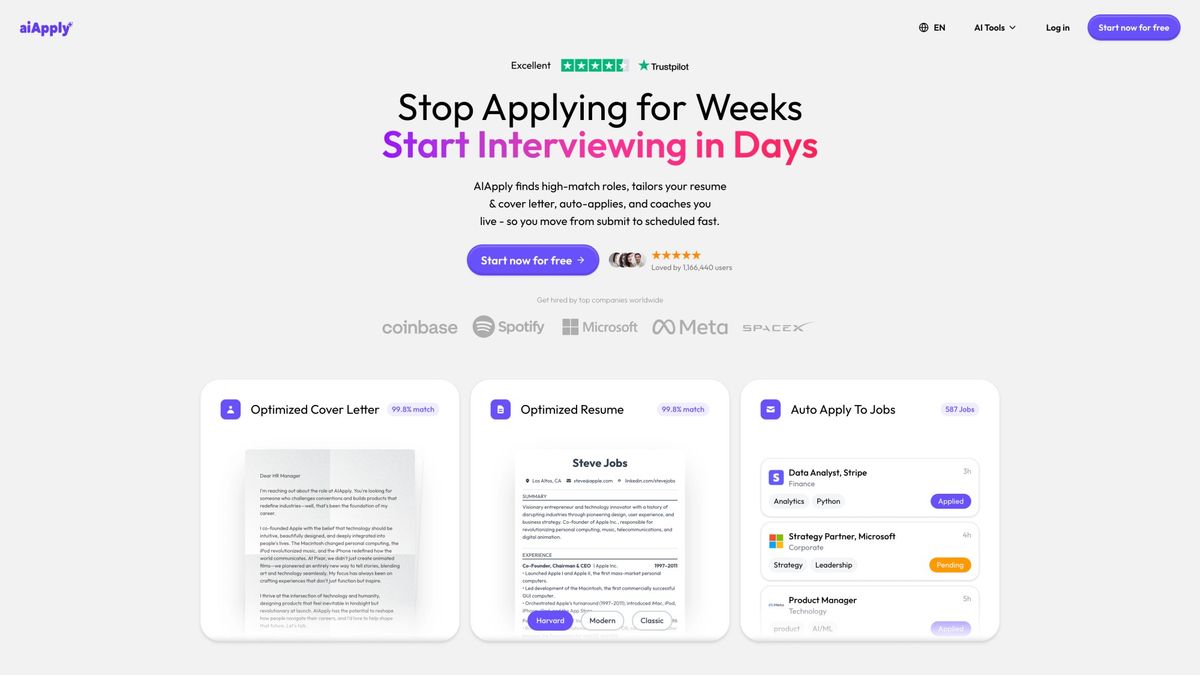
1. Build the "Application" Resume First
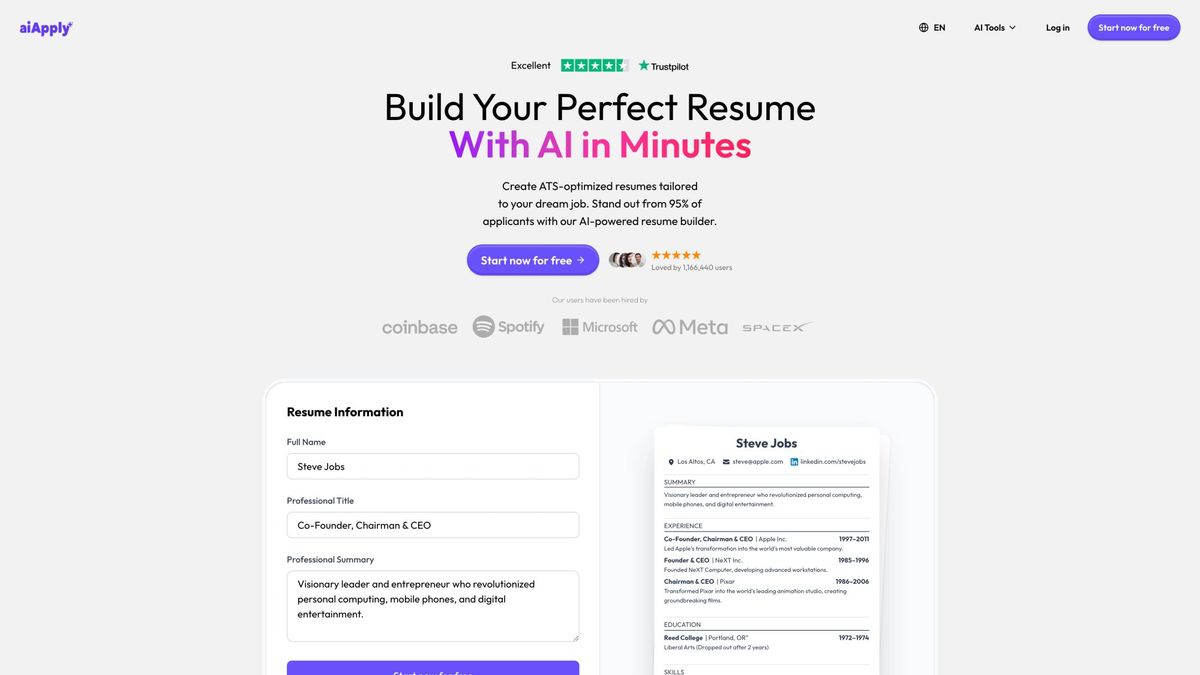
Use our Resume Builder to generate a job-specific resume draft. The platform uses GPT-4 to create tailored content in minutes, optimized for ATS compatibility. Whether you're a software engineer, project manager, or marketing manager, the tool adapts to your role.
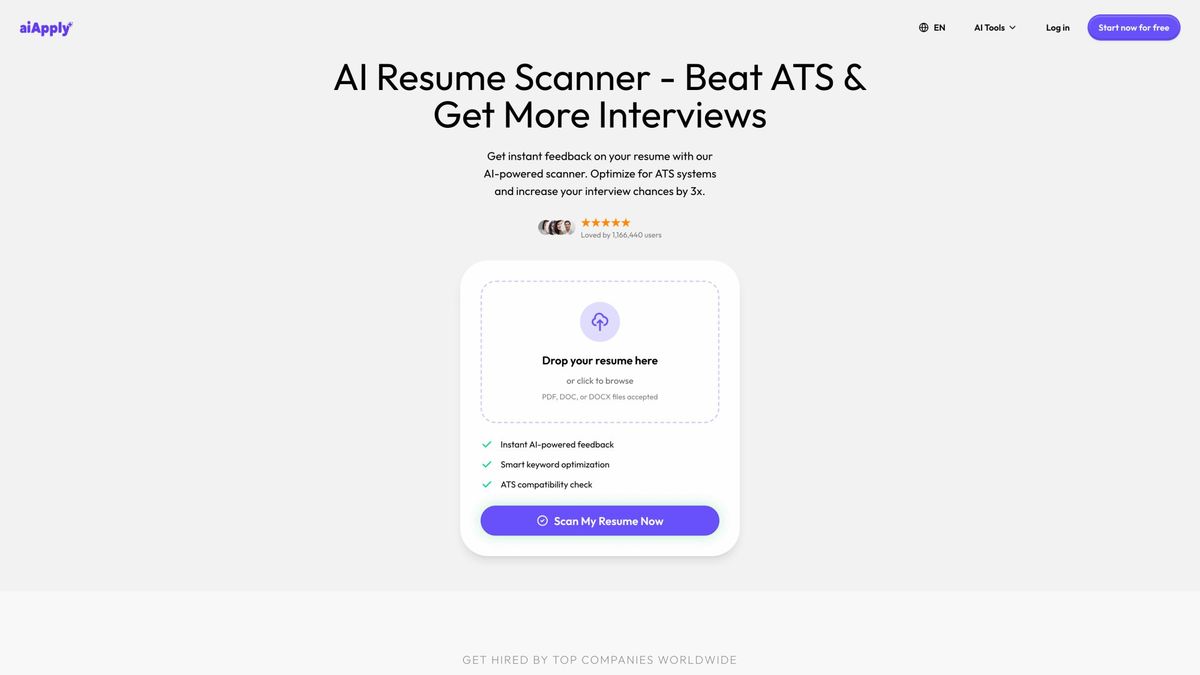
2. Run It Through the Scanner
Use our Resume Scanner to catch ATS compatibility issues and keyword gaps before you start compressing.
3. Export a 1-Page Version by Trimming, Not Shrinking
Cut older roles, condense bullets, and keep page 1 as the "highlight reel." Our format tips already recommend tailoring length by career stage and prioritizing recent experience.
You can export in PDF, DOCX, or plain text format depending on application requirements.
4. Keep Both Versions Updated
Every time you add a win or metric, add it to the 2-page first, then decide if it earns a spot on the 1-page.
This lets you match the audience: one-page for speed, two-page for proof.
Pro tip: Use our Auto Apply to test which version gets more responses. The platform automatically customizes applications and tracks results, giving you real data on what works.
Frequently Asked Questions
Is 1.5 Pages Okay?
It's not illegal. But it's often a sign you're undecided.
HBS's advice ("1 or 2, not 1 and ¼") is basically: Choose a format and make it look intentional.
If you're sitting at 1.5 pages:
• Either cut to a clean 1 page, or
• Add the missing proof and go full 2 pages
Can Entry-Level Candidates Use 2 Pages?
Yes, but only if page 2 is real proof:
• Multiple internships
• Serious projects (with metrics)
• Publications/competitions
• Relevant certifications
Otherwise it reads like padding.
When is 3 Pages Acceptable?
For most corporate roles, rarely. Standard guidance suggests one to two pages is sufficient for most, with three pages mainly for very long careers or specific fields like academia/medicine.
For US federal roles: Don't assume 3 pages works anymore. USAJobs now enforces 2 pages for many postings.
Do Recruiters Actually Spend Time Reading Resumes?
Recent data says 78% of hiring managers spend over 1 minute reviewing each resume.
That's good news: it means detail can be rewarded, if it's relevant and readable.
Should I Use Different Lengths for Different Applications?
Absolutely. Having both a concise 1-page "networking version" and a detailed 2-page "application version" gives you flexibility. Match the format to the situation.
What About Creative Fields or Portfolios?
For creative roles (design, marketing, etc.), your portfolio often matters more than resume length. A concise 1-page resume plus a strong portfolio link is usually ideal. Let your work speak louder than words.
How Do I Know If My Resume is Too Dense?
The "squint test": Step back and look at your resume from across the room. If it looks like a solid block of text with no white space, it's too dense (regardless of page count). Good resumes have visual breathing room.
Can I Use Different Fonts to Fit More Content?
Stick to professional fonts at readable sizes (10-12pt). Don't use multiple fonts or shrink text below 10pt just to fit more content. If you can't fit everything at a readable size, it's time for two pages.
What If the Job Posting Doesn't Specify a Length?
When there's no specification, default to the norms for your experience level and region:
• Early career (< 5 years): 1 page
• Mid-career (5-10 years): 1-2 pages depending on content
• Senior (10+ years): 2 pages
• UK applications: Default to 2 pages unless very early career
Should I Adjust My Resume Length for Online vs Print Applications?
In 2026, most applications are digital. ATS systems and recruiters viewing on screens handle two pages just as easily as one. Print considerations are less relevant unless you're attending a job fair where you'll hand out physical copies (in which case, bring your 1-page networking version).
How Often Should I Update My Resume Length Decision?
Reassess every 2-3 years or whenever you:
• Add substantial new experience (major role, significant project)
• Change industries or career focus
• Apply to a different region or market
• Notice a format isn't getting results
Your resume should evolve with your career. What worked at 3 years of experience may not work at 8 years.
The Rule That Actually Works
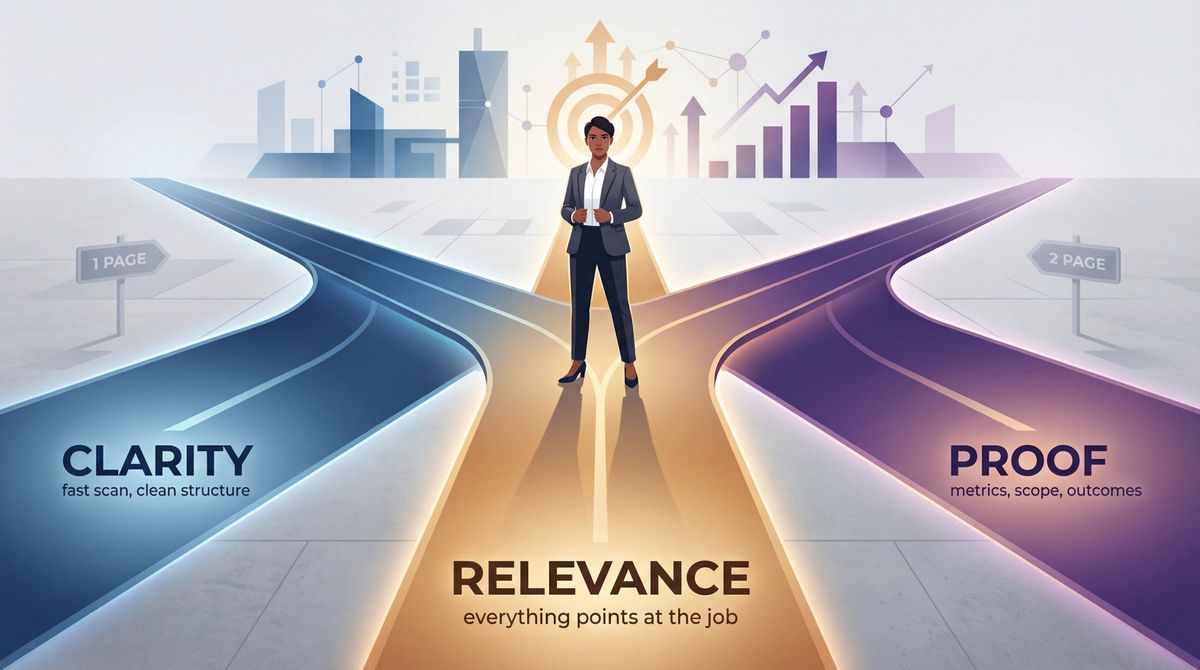
Don't optimize for page count. Optimize for:
• Clarity (fast scan, clean structure)
• Proof (metrics, scope, outcomes)
• Relevance (everything points at the job)
Then pick the length that fits those three without distortion.
Conclusion: Quality Over Quantity in 2026
In the "one page vs two pages" debate, the overarching rule in 2026 is relevance and clarity matter more than strict length rules.
The old one-page rule is no longer absolute. Many hiring managers appreciate a well-crafted two-page resume, and in some cases even prefer it for experienced candidates. Research shows recruiters often reward the added detail of a two-page resume by spending more time on it and rating it higher.
But never add pages just because you think a longer resume looks more impressive. Recruiters can spot fluff instantly, and they will skim or skip sections that feel padded.
Every line of your resume should offer value. If you can pack a punch in one page, there's no harm in sticking to one. Early-career folks who create a concise, impactful one-page resume often impress recruiters with their focus.
Ultimately, the content drives the length. Use one page if that's all you need to effectively present your case. Use two pages if it allows you to better illustrate why you're the ideal candidate. Both can be equally effective when used in the right context.
The goal is a resume that tells your story in the clearest, most compelling way (whether that's in 300 words or 600 words). In 2026, you have permission to break the old one-page rule, but the timeless principle remains: make every word on your resume count.
Ready to build your perfect resume? Try our Resume Builder and let AI handle the heavy lifting while you focus on showcasing your achievements. Need help with your cover letter too? We've got you covered.