What Shows Up On A Background Check For Employment? (2026)
What actually shows up on employment background checks? Complete guide to DBS checks, FCRA rules, criminal records, and how to prepare without surprises.


You've impressed in the interviews. The hiring manager loves you. They send the offer letter with one line that makes your stomach drop: "Subject to successful completion of background checks."
Now you're wondering what they'll actually see. Will that job you left on bad terms show up? What about the speeding ticket from three years ago? Can they see your credit score? Your Twitter arguments?
Here's what most people don't realize: there's no single "background check" that reveals everything about you. What shows up depends on where you're applying (UK vs US have completely different systems), what role you're seeking, what you consent to, and whether the employer uses a third-party screening company.
This guide breaks down exactly what employers can see, what they typically can't see, how far back checks go, and how to prepare so you don't get surprised after investing weeks in the interview process.
What Employers Actually Check In Background Verifications
Most employers aren't pulling one magic report that shows your entire life history. They're combining several specific checks depending on the role:
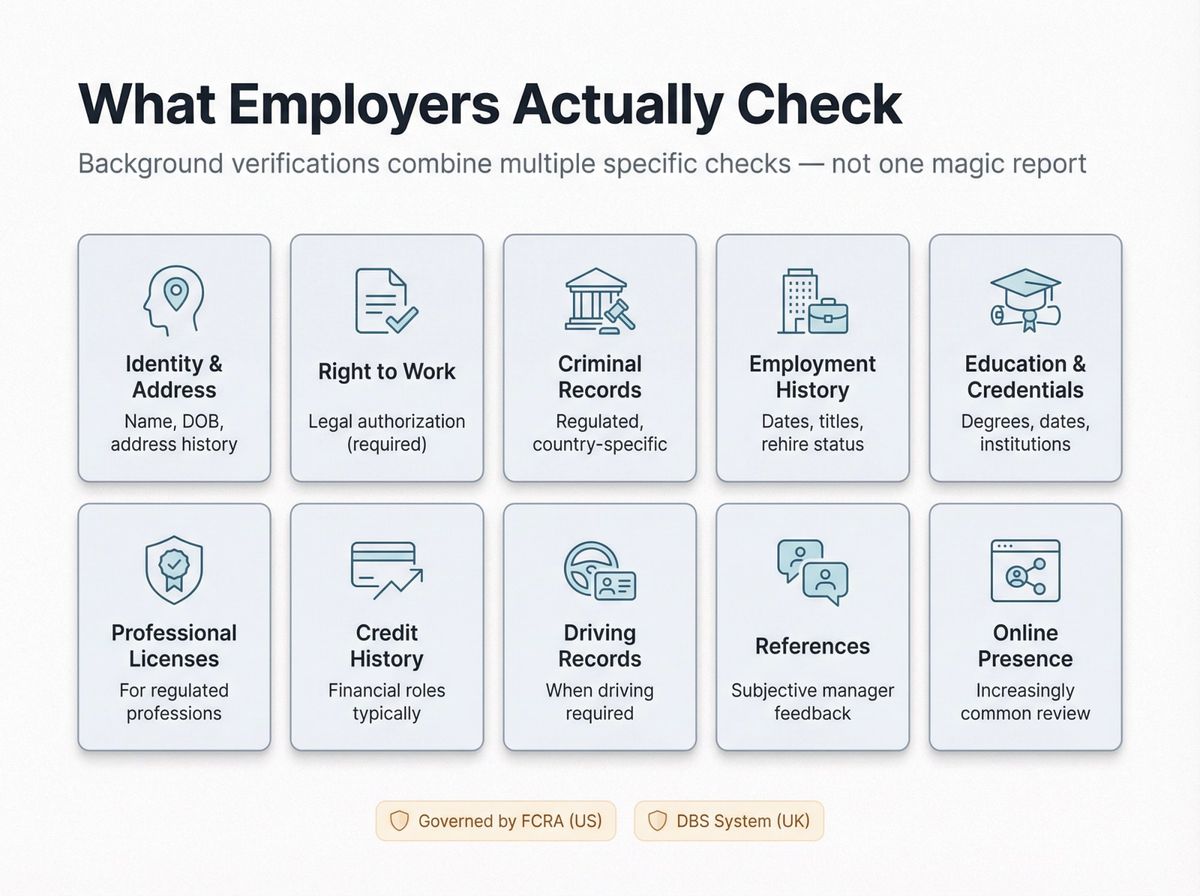
• Identity and address history verification
• Right to work authorization (legally required in UK and US)
• Criminal record checks (heavily regulated and country-specific)
• Employment history verification (dates, titles, sometimes eligibility for rehire)
• Education and credential verification
• Professional license checks (for regulated professions)
• Credit history reviews (typically for financial roles or positions with spending authority)
• Driving record checks (when driving is part of the job)
• Reference conversations (subjective feedback from past managers)
• Public online presence review (increasingly common, sometimes automated)
In the US, when a third-party company provides these checks, they're treated as consumer reports under the Fair Credit Reporting Act, which gives you specific rights and protections.
In the UK, criminal record checks follow a tightly structured system run by DBS (Disclosure and Barring Service) in England and Wales, Disclosure Scotland, or AccessNI in Northern Ireland. Not every employer can access deep criminal history, and what they can see depends on whether the role legally qualifies for enhanced checks.
10 Most Common Background Checks (And What Shows Up)
1. How Identity and Address Verification Works
What can show up:
Your full legal name, date of birth, and recent addresses get verified against credit headers, electoral roll data, or other reliable sources. If you've used previous names (through marriage, deed poll, or other changes), those might appear. The check flags potential mismatches or aliases that need clarification.
What it's for:
This prevents the embarrassing (and legally risky) scenario where your employer runs a criminal record check on the wrong "John Smith" and makes a decision based on someone else's history.
How to prepare:
Make sure your resume, LinkedIn, and application use the exact same legal name. If you've changed names, mention it proactively. Keep your address history consistent across applications, especially if you've moved frequently.
2. What Right to Work Checks Reveal
This isn't optional. Employers in both the UK and US are legally required to verify you're authorized to work.
UK:
The Home Office updated its right to work guidance in 2025. The process varies depending on your immigration status. Some candidates can be verified through online systems, others need manual document checks, and some require identity verification technology (IDVT) or digital verification services (DVS).
US:
Federal law requires employers to complete Form I-9 to verify both your identity and employment authorization. Many employers also use E-Verify, an electronic system that cross-references your I-9 information with Department of Homeland Security and Social Security Administration records.
How to prepare:
Have your documents ready and current. If you're on a work visa or have time-limited work permission, know your expiry dates and renewal timeline. Don't assume your employer's HR team will remind you.
3. Do Criminal Records Show Up On Background Checks?
This is the check that causes the most anxiety, and what shows up varies dramatically by country and check level.
Critical to understand: Not every employer can access your full criminal history. What appears depends on conviction age, severity, and the specific level of check the employer is legally entitled to request.
For UK-specific details, skip to the "UK Criminal Record Checks" section below.
For US-specific details, see the "US Employment Background Checks Under FCRA" section.
The short version: not every employer can access your full criminal history, what appears depends on conviction age and severity, and you have dispute rights if something's wrong.
4. Can Employers Verify Your Employment History?
What can show up:
Verification companies or reference checkers typically confirm whether you worked at a company, your job title, and your start and end dates. Some employers will also say whether you're eligible for rehire, but policies vary wildly. Occasionally, HR will share a general reason for leaving (resigned, laid off, terminated), but there's no legal requirement to do so.
Important reality check:
There's no universal database that tracks every job you've ever left or why you left it. When candidates ask "will my termination show up," the answer is: only if your new employer specifically contacts that former employer or if you listed them as a reference.
What usually trips people up isn't a magical termination registry (it doesn't exist), but inconsistencies between what you claimed on your application and what your former employer confirms.
If you want to understand more about this myth, we've covered it in detail in our guide on how employment verification actually works.
How to prepare:
Keep your resume dates aligned with what your former employer's HR system will report. If you have employment gaps, you don't need to invent jobs to fill them, but you do need a straightforward explanation ready. Our AI Resume Builder helps you maintain timeline integrity across all your applications so you never accidentally create verification mismatches.
5. How Employers Verify Education Credentials
What can show up:
Your degree status (awarded, in progress, or not found), the dates you attended, and sometimes your major or field of study. Honor societies and academic awards are rarely verified unless they're directly relevant to the role.
How to prepare:
Be precise. Don't claim "MBA" if you completed some modules but didn't finish the degree. Use the official institution name (not nicknames or rebranded names) to avoid verification mismatches. Our Resume Scanner can help you spot potential red flags before you submit.
6. Do Professional Licenses Show Up On Background Checks?
Common in healthcare, finance, legal, security, childcare, teaching, and engineering roles. If your job requires a license, expect it to be verified.
What can show up:
Whether your license is active, inactive, or expired. Many regulatory bodies also publish disciplinary actions, sanctions, or restrictions publicly. If you've had complaints filed or faced professional misconduct proceedings, those often appear in public license databases.
7. Can Employers Check Your Credit History?
Typically used for roles involving money handling, financial authority, positions in regulated financial services, or senior roles with budget control.
What can show up:
Your credit accounts, payment history, defaults, and outstanding debts. In some jurisdictions, bankruptcies, insolvencies, or county court judgments may appear. Some credit reports also show how often you've applied for credit recently.
Legal constraints:
Not every employer can run a credit check on you. The FTC warns that local laws (state or city level in the US, and UK data protection rules) can restrict when and how employers use credit history in hiring decisions.
8. What Shows Up On Driving Record Checks?
Used when you'll be driving company vehicles, using your own car for business purposes, or when the employer is adding you to their insurance policy.
What can show up:
Your license status (valid, suspended, revoked), certain endorsements or violations, and recorded points. What specifically appears varies by jurisdiction. Minor infractions from years ago may or may not show up depending on local rules and how the check is run.
9. What References Tell Employers About You
This is where subjective opinions enter the process.
What can show up:
Feedback about your performance, reliability, strengths, weaknesses, how you work with teams, and sometimes patterns around attendance or punctuality. References can make or break an offer, especially when technical skills are similar between final candidates.
How to prepare:
Choose references strategically. Brief them on the role you're pursuing so they can tailor their feedback. Make sure they can actually speak to relevant skills and won't be caught off-guard by the call. Our Interview Buddy can help you prepare for reference-related questions that might come up during final interviews.
10. Can Employers Check Your Social Media?
US regulators explicitly acknowledge that employers might review public social media activities. Some companies do this manually (a quick scan of your LinkedIn, Twitter, or Facebook). Others use third-party tools that aggregate public data.
How to prepare:
Make your LinkedIn profile consistent with your resume (same dates, same job titles). Lock down anything you wouldn't want a hiring manager to see out of context. And maybe skip the public arguments about divisive topics until after you've signed the offer.
UK Criminal Record Checks: What Actually Shows Up
The UK operates three separate criminal disclosure systems depending on where the job is based:
• DBS (Disclosure and Barring Service): England & Wales
• Disclosure Scotland: Scotland
• AccessNI: Northern Ireland
The Information Commissioner's Office recognizes these as the official bodies with authority to handle criminal offence data in the UK.
How DBS Checks Work (England and Wales)
There are four levels of DBS checks, and what shows up at each level is strictly regulated.
| DBS Level | Who Can Request It | What Shows Up | 2025 Fee |
|---|---|---|---|
| Basic | Anyone (no role requirements) | Unspent convictions and cautions only | £21.50 |
| Standard | Only for eligible roles under Rehabilitation of Offenders Act Exceptions | Spent and unspent convictions + adult cautions (not filtered items) | £21.50 |
| Enhanced | Only for eligible roles under ROA Exceptions + Police Act regulations | Standard-level info plus police-held information relevant to the role | £49.50 |
| Enhanced with barred lists | Only for regulated activity (working with children or vulnerable adults) | Enhanced info plus checks against barred lists | £49.50 |
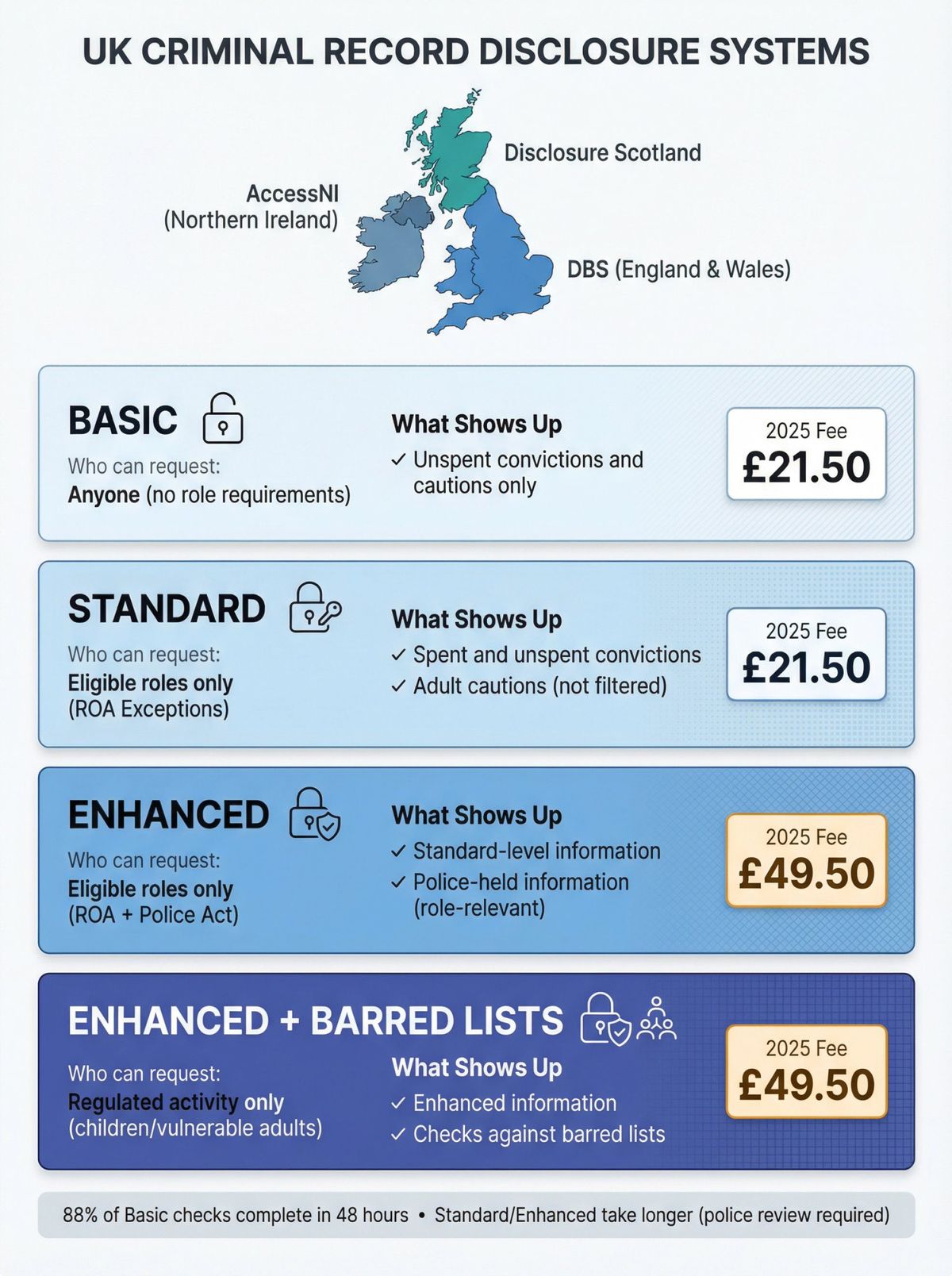
Two critical details most people miss:
① Standard and Enhanced checks aren't available for every job. They're only allowed when the employer is legally entitled to ask an "exempted question" about spent convictions under the Rehabilitation of Offenders Act. If the role doesn't qualify, they can only run a Basic check.
② Basic checks show unspent convictions only. Some serious sentences never become spent and will always appear on Basic checks.
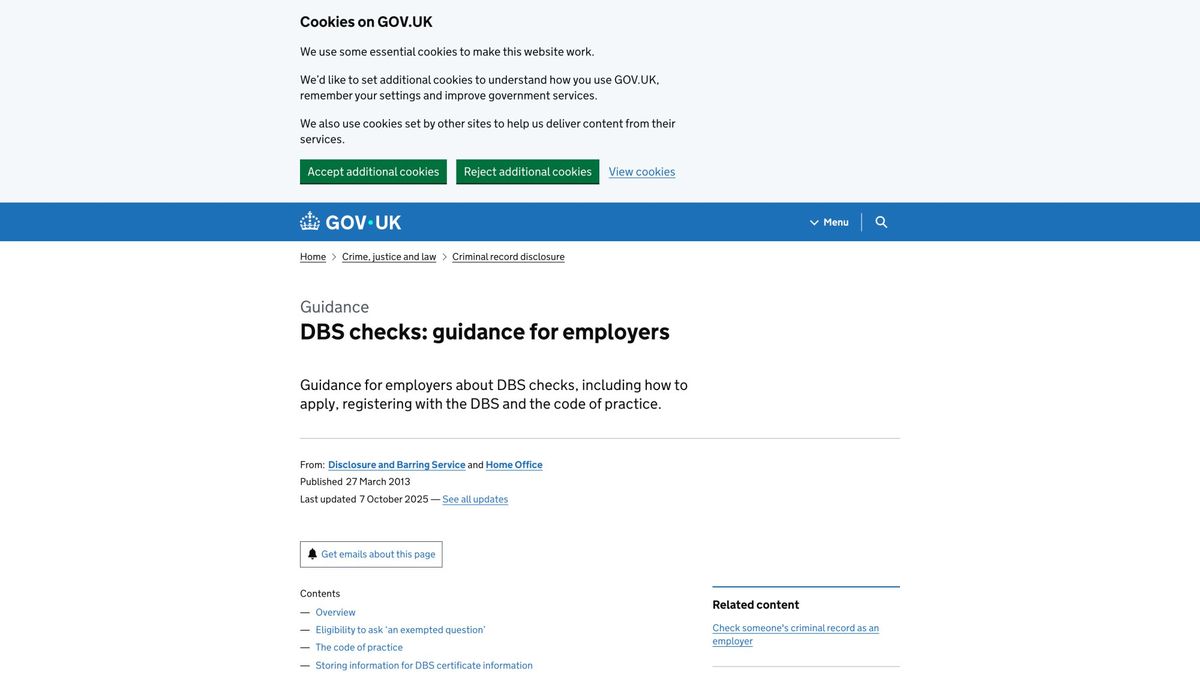
The official DBS guidance portal provides detailed requirements for each check level, fee structures, and applicant rights. Understanding which level applies to your role helps you prepare appropriate disclosure.
DBS Filtering
Some old or minor offences are filtered out of Standard and Enhanced certificates under specific rules. Changes to filtering apply to certificates issued from late October 2023 onwards.
Turnaround Time
The DBS reports that 88% of Basic checks are processed within 48 hours. Standard and Enhanced checks take longer because police forces need to review additional information.
What Your Employer Actually Sees
Employers must view an original DBS certificate in person. Copies, photos, or scanned versions aren't acceptable for making safe recruitment decisions.
DBS Update Service
If you subscribe within the allowed window, the Update Service lets you reuse Standard or Enhanced certificates for similar roles, saving time and money when you switch jobs in the same sector.
Transgender Applicants
The DBS offers a confidential checking process for transgender applicants who don't want previous identity details disclosed during the application.
Overseas Criminal History
The DBS cannot access overseas criminal records (though in rare cases, overseas records might exist on the UK Police National Computer). If you've lived abroad, employers often require additional certificates of good conduct from those countries.
If There's a Mistake
You can dispute errors on Standard or Enhanced DBS certificates, but there's a deadline. The DBS says you should report mistakes within 3 months of the certificate date.
How Disclosure Scotland and PVG Work
Scotland introduced a new disclosure framework in 2025. Starting April 1, 2025, disclosure types include Level 1, Level 2, Level 2 with barred list, and PVG scheme membership for regulated work with children or protected adults.
In plain English:
→ Level 1: Shows unspent convictions only.
→ Level 2: Shows unspent plus certain spent convictions. It can also include relevant police information and other specified details depending on the role.
→ PVG (Protecting Vulnerable Groups): Used for regulated roles with children or protected adults. Includes unspent and certain spent conviction information.
Your rights:
You can request a review of disclosure content before you share it with an employer, but there are short deadlines. Act quickly if you see something you believe is wrong or shouldn't be included.
How AccessNI Checks Work (Northern Ireland)
AccessNI provides Basic, Standard, and Enhanced checks similar to the DBS system.
What shows up at each level:
→ Basic: Unspent convictions only (or states "no convictions found").
→ Standard: Spent and unspent convictions, plus police non-court disposals like informed warnings. Minor or old items may be filtered. Parking fines and fixed penalty tickets don't appear.
→ Enhanced: Everything from Standard, plus police information relevant to the role and DBS information for regulated activities. Again, some items are filtered, and parking fines don't show up.
An unusual Northern Ireland rule:
NI Direct explicitly warns that if an employer needs to check your criminal history, they must use AccessNI. It's actually an offence for an employer to ask you to get a criminal record directly from the police.
Transgender applicants:
Like the DBS and Disclosure Scotland, AccessNI has a special process for transgender applicants who don't want previous names or gender disclosed to the requesting organization.
UK Privacy Rules That Shape Background Checks
Background screening in the UK is also governed by UK GDPR and the Data Protection Act 2018. The Information Commissioner's Office emphasizes that recruitment often involves multiple organizations and "novel technologies," and employers must comply with data protection law when verifying and vetting candidates.
For criminal offence data, UK GDPR Article 10 adds extra restrictions: employers must have a lawful basis and be under official authority or meet a specific DPA 2018 Schedule 1 condition (with appropriate safeguards).
Practically, this is why:
• Not every employer can legally run deep criminal checks
• Employers must justify why checks are necessary and proportionate for the role
US Employment Background Checks: What FCRA Rules Mean For You
If you're applying for jobs in the United States, the Fair Credit Reporting Act (FCRA) is the main law that governs background screening when employers use third-party companies to compile reports.
What Shows Up In US Background Reports
The FTC's consumer guidance lists common categories employers might investigate:
• Employment history
• Education credentials
• Criminal or other public records
• Financial or credit history
• Public social media activities
The EEOC similarly notes that employers may request many types of background information, with special restrictions on medical and genetic information.
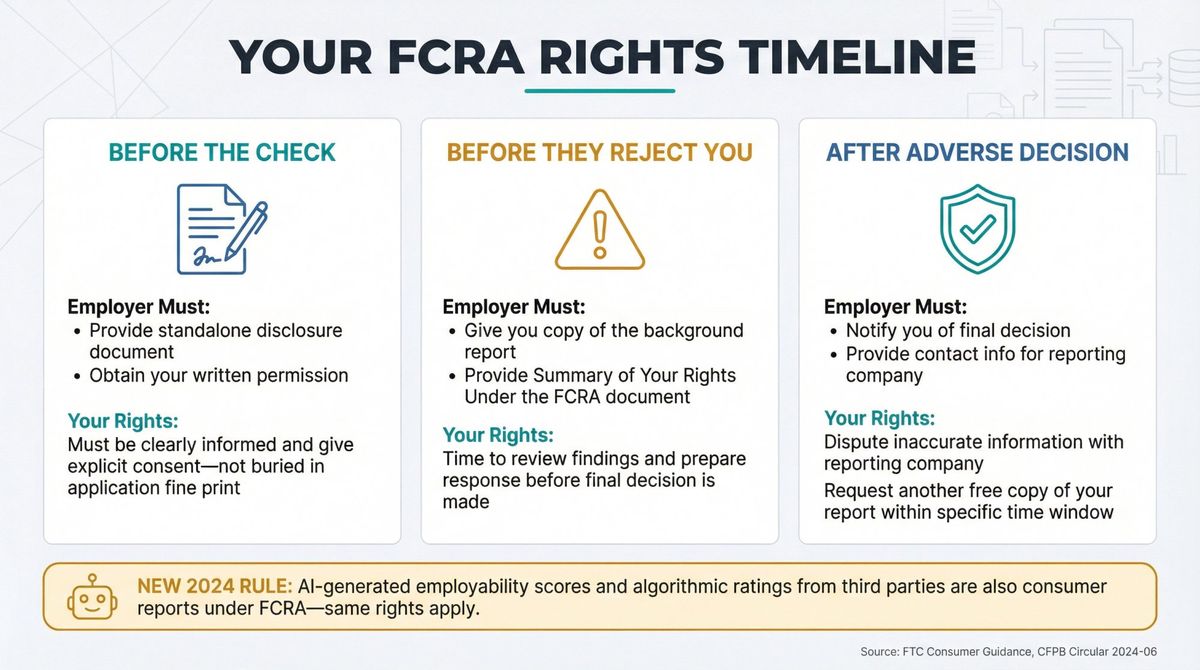
Your Rights Under FCRA Before and After Background Checks
If an employer uses a background reporting company, the FTC explains you have these rights:
Before the check:
The employer must disclose they're getting a background report in a standalone document (not buried in the application), and they must get your written permission.
Before they reject you:
If they're planning to deny you the job because of what's in the report, they must give you a copy of the report and a "Summary of Your Rights Under the FCRA."
After an adverse decision:
You have the right to dispute inaccurate information with the reporting company, and you may be entitled to another free copy of your report within a specific time window.
Can AI Scores Be Used In Background Checks?
Here's where things get modern and a bit dystopian.
In October 2024, the Consumer Financial Protection Bureau issued Circular 2024-06, clarifying that background dossiers and algorithmic scores obtained from third parties and used for hiring, promotion, or retention decisions are often "consumer reports" governed by the FCRA.
Translation: If an employer buys an AI-generated "employability score" or "worker risk rating" from a data broker, they still have to follow FCRA rules like getting your permission and giving you adverse action notices if they reject you based on that score.
How to Spot and Fix Inaccurate Background Check Reports
In January 2024, the CFPB issued an advisory emphasizing that screening companies must:
• Use reasonable procedures to avoid false or misleading reports
• Avoid reporting duplicative items
• Include disposition information (not just charges)
• Avoid reporting expunged, sealed, or legally restricted records
The advisory also clarifies that a non-conviction disposition of a criminal charge generally can't be reported beyond a seven-year period that starts at the time of the charge, and each adverse item has its own reporting period.
What Typically Does NOT Show Up On Background Checks
This is where candidates waste anxiety on things that usually don't appear in standard employment background checks:
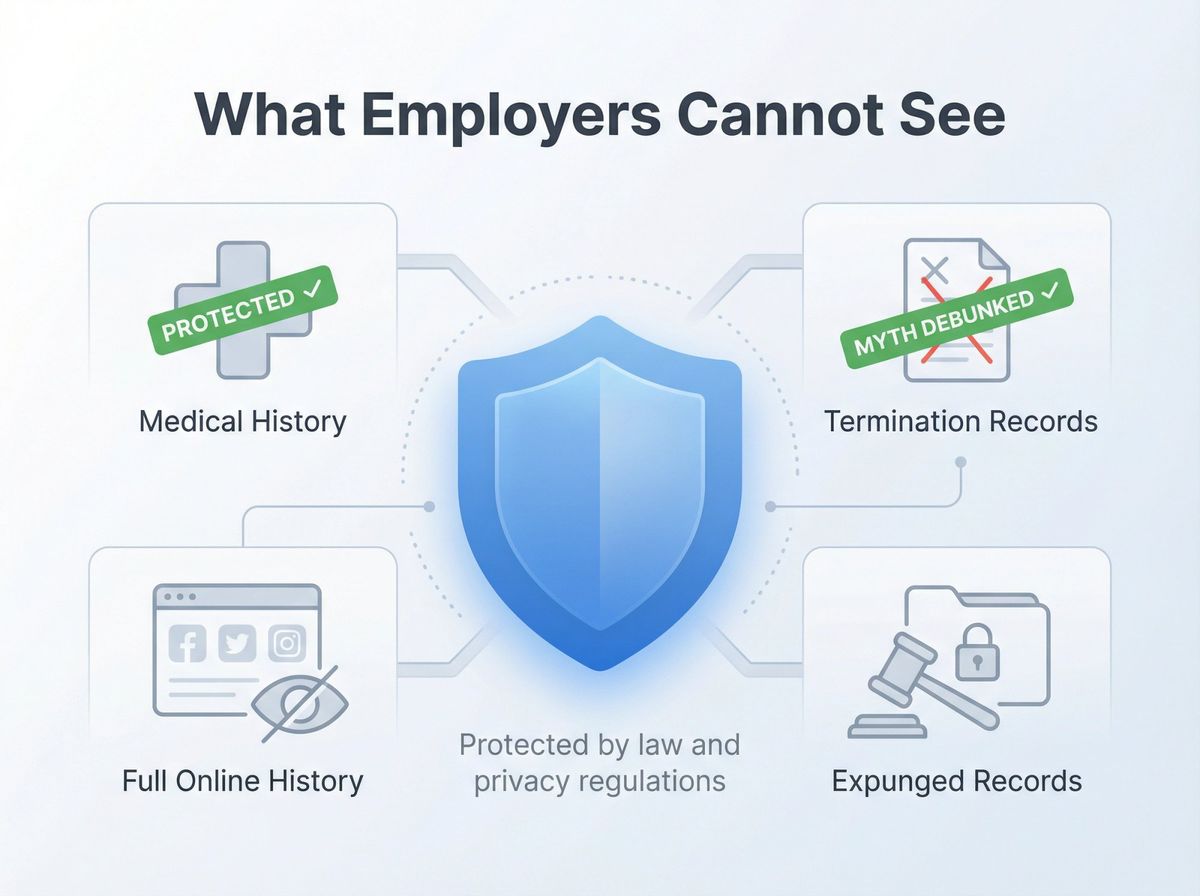
Your full medical history:
In the US, employers can't ask for medical information until after they make you a job offer. Genetic information has even tighter restrictions.
A universal "termination record":
There's no central registry tracking every job separation. Employment endings are discovered through verification calls and references, not a national database. We've debunked this myth extensively in our Interview Answer Buddy guide.
Everything you've ever done online:
Most checks focus on public material and role-relevant information. Some US screening products go deeper, but that triggers additional legal and compliance duties under the FCRA.
Expunged or sealed records:
US consumer reporting agencies should not report legally restricted records if they have reasonable procedures in place.
How Far Back Do Background Checks Go?
There's no universal "7 years" or "forever" rule that applies across all countries and all check types.
How Far Back UK Background Checks Go
UK criminal record disclosure follows the spent vs unspent framework under the Rehabilitation of Offenders Act. Basic DBS checks focus on unspent convictions and cautions. Standard and Enhanced checks include spent and unspent items that haven't been filtered, plus additional role-dependent information for Enhanced.
So "how far back" depends on:
• The conviction type and sentence length (which determines rehabilitation period)
• Whether the item is filtered under DBS rules
• The level of check the employer can legally request
How Far Back US Background Checks Go
For US consumer reports, regulators emphasize rules around outdated negative information and the importance of the reporting period tying to the adverse event and disposition timing. For example, non-conviction dispositions generally can't be reported beyond seven years from the charge, not the disposition date.
State and local laws can restrict how far back checks can go or how criminal history is considered in hiring. The FTC notes these restrictions vary significantly across jurisdictions.
How to Prepare for a Background Check (Step-by-Step)
Most background check problems aren't caused by what's in your history. They're caused by mismatches between what you claimed and what the verification shows. Here's how to avoid that.
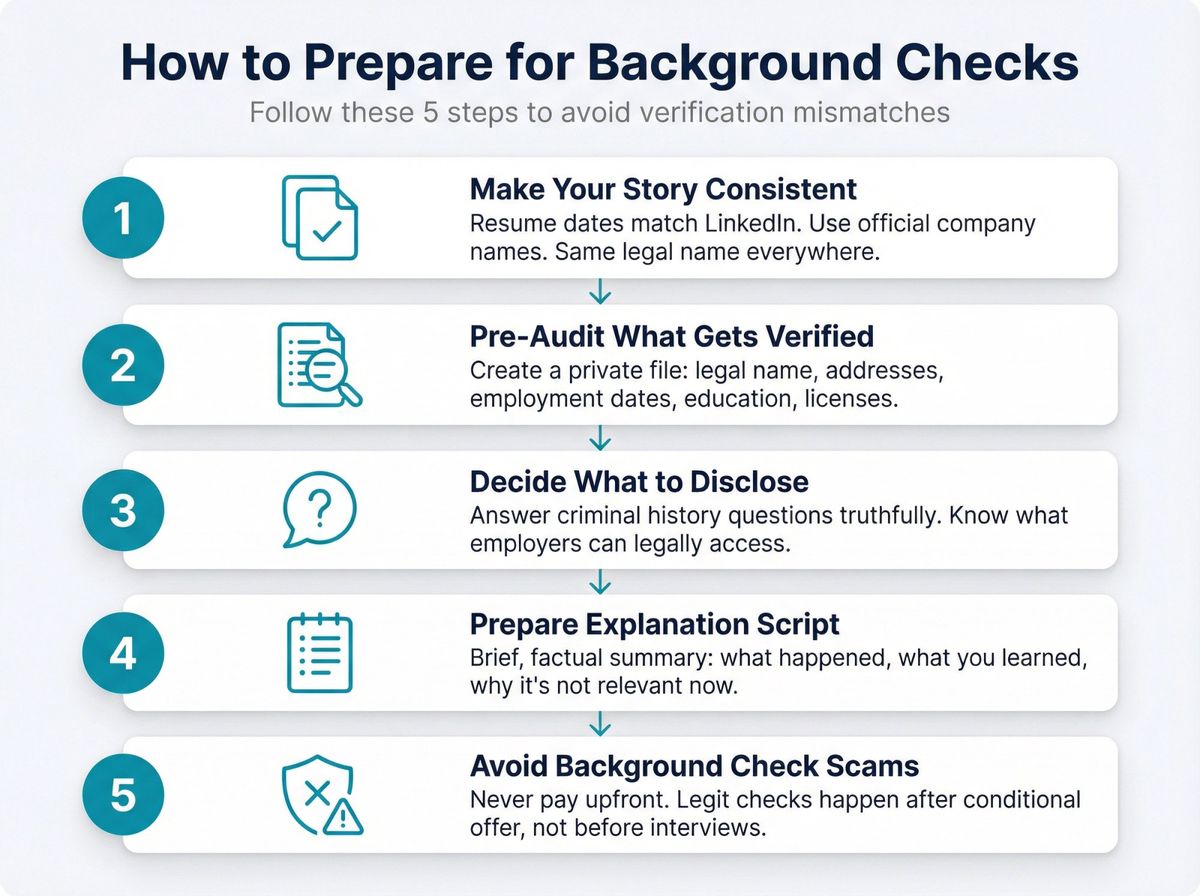
Step 1: Make Your Story Consistent Everywhere
This is non-negotiable. Inconsistencies trigger delays, additional scrutiny, and sometimes outright rejections.
Your checklist:
→ Resume dates match LinkedIn dates exactly
→ Company names are consistent (use the official name, not acquired/rebranded versions unless you note the change)
→ Education institution names match official records
→ You use the same spelling and order of your legal name across all applications
At AIApply, we help job seekers generate role-specific resumes and cover letters while keeping core timeline details consistent across every application. When you're applying to dozens of jobs with our Auto Apply feature, it's easy to accidentally tweak a date or title and create a verification mismatch. Our AI tools prevent that.
Step 2: Pre-Audit What an Employer Will Verify
Create a private "verification file" (just a doc for yourself) with:
• Legal name + any previous names you've used
• Last 7-10 years of addresses
• Employment list with: company name, job title, manager name, HR contact (if you have it), and exact start/end dates
• Education list with: institution name, dates attended, qualification earned
• Professional license numbers and expiry dates
• Right-to-work document details and expiry dates
Having this in one place makes it easier to keep applications consistent and helps you spot potential red flags before an employer does. Our Resume Checker can help you identify potential verification issues before you submit.
Step 3: Decide What to Disclose and When
If an application asks about criminal history, answer truthfully within what's legally asked and relevant to the role.
UK candidates:
Remember that Standard and Enhanced checks are tied to specific eligible roles and filtering rules. Basic checks show unspent convictions only. Don't volunteer information the employer isn't entitled to access. (GOV.UK guidance)
US candidates:
Some jurisdictions restrict when employers can ask about criminal history (ban-the-box laws). The FTC notes that local laws can affect timing and scope.
Step 4: Prepare an Explanation Script (If You Need One)
If you expect something might appear on your check, prepare a calm, brief explanation:
One-paragraph factual summary:
• What happened (in neutral terms)
• What you learned from it
• What's changed since (rehabilitation, training, steady employment record)
• Why it's not relevant to the job's specific responsibilities and risks
Practice saying it out loud until it sounds natural and matter-of-fact. Don't over-explain or get defensive. Our Interview Answer Buddy can help you prepare for these difficult questions.
Step 5: Avoid Background Check Job Scams
The FTC warns against putting your Social Security number or banking information on your resume. Legitimate background checks happen after a conditional job offer, not before the first interview. If someone asks for payment to "run your background check" early in the process, it's probably a scam.
What to Do If Your Background Check Has Errors
Mistakes happen. Records get mixed up, data entry errors occur, and sometimes old information that should have been filtered still appears. Here's how to challenge it.
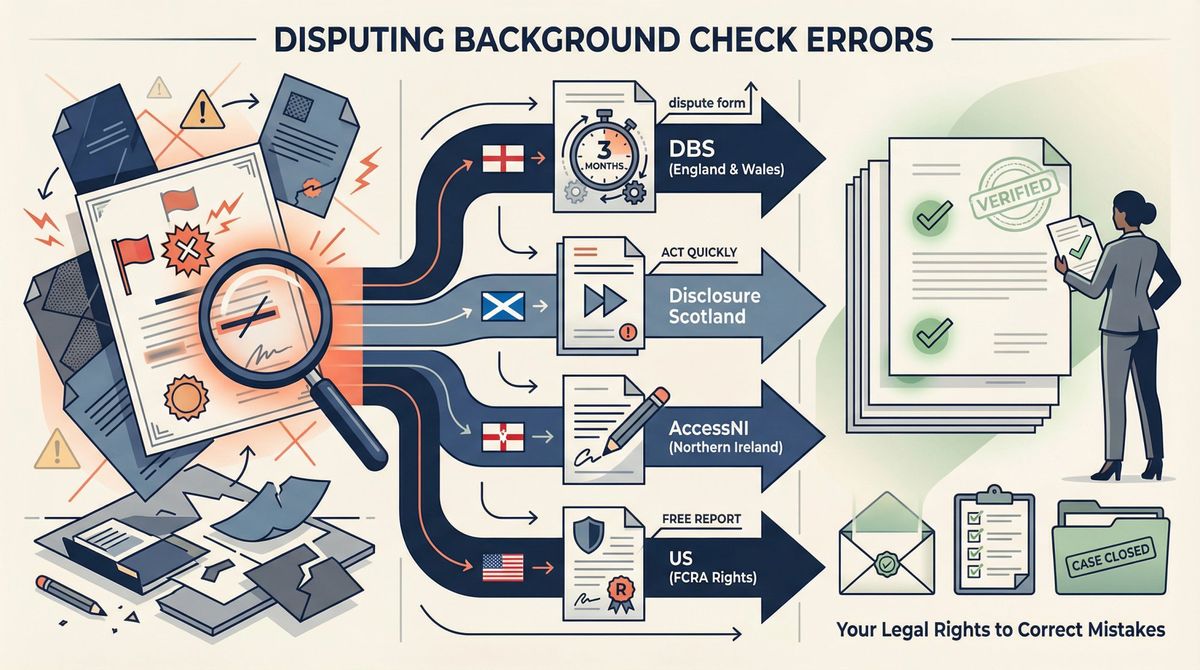
How to Dispute DBS Errors (England and Wales)
The DBS provides a dispute process for Standard and Enhanced certificates. You should report mistakes within 3 months of the certificate date.
How to Dispute Disclosure Scotland Errors
Citizens Advice Scotland notes you can request a review of disclosure content before you share it with an employer. Act quickly because there are short deadlines to request reviews.
How to Dispute AccessNI Errors (Northern Ireland)
NI Direct explains how AccessNI certificates are used and notes you can raise a dispute if something is incorrect.
How to Dispute Background Check Errors (United States)
If you're turned down because of a background report, the FTC describes your right to dispute inaccuracies with the reporting company and to request another free report within a specific time window after an adverse action.
Frequently Asked Questions
Does a background check show why I left a job?
Not usually as a standardized "reason for leaving" field. Employers typically learn your employment dates and sometimes job titles through verification services. Details about why you left usually come through reference checks, if your past employer chooses to share them. (FTC guidance)
Do dismissed charges show up?
It depends. In the UK, Standard and Enhanced DBS certificates focus on convictions and cautions, with filtering rules applied. Enhanced checks can include police-held information relevant to the role. (GOV.UK)
In the US, regulators emphasize that screening reports should include disposition information and that non-conviction dispositions generally can't be reported beyond certain time limits tied to the original charge date. (CFPB advisory)
Can employers check my social media?
Yes. US regulators explicitly acknowledge that employers might check public social media activities. Some do it manually, others use third-party tools. Keep your LinkedIn consistent with your resume and lock down content you wouldn't want hiring managers to see.
Can every UK employer run an Enhanced DBS check?
No. Access to Standard and Enhanced checks is restricted to eligible roles where the employer can legally ask exempted questions under the Rehabilitation of Offenders Act and related legislation. If your role doesn't qualify, they can only request a Basic check.
How much is a DBS check in 2025?
DBS fees changed from December 2, 2024:
• Basic: £21.50
• Standard: £21.50
• Enhanced: £49.50
• Update Service: £16 per year
Umbrella bodies or agencies may charge additional admin fees on top of these amounts.
What if I have a gap in my employment?
Gaps aren't automatically disqualifying. What matters is whether you can explain them clearly and whether your resume is honest. If you took time off for family care, health recovery, education, or even just job searching, say so. Don't fabricate employment to fill the gap. That creates a verification problem and damages trust.
Our Resume Summary Generator can help you present employment gaps honestly without raising red flags.
Can I see my background check before my employer does?
In the UK, you receive your DBS certificate before your employer (they get a separate copy or verify your certificate). You can see what's on it before deciding whether to share it.
In the US, if a third-party company compiles your report, you have the right to see it if it's used for an adverse employment decision. You can also request your own background check reports proactively from some providers.
How long does a background check take?
UK Basic DBS checks are typically completed within 48 hours for 88% of applications. Standard and Enhanced checks take longer depending on police force workload and whether additional information needs reviewing.
In the US, timelines vary based on the scope of the check and the responsiveness of previous employers or educational institutions. Simple checks can take a few days; comprehensive checks might take two weeks or more.
Where AIApply Fits Into Background Check Success
Background checks don't just test your past. They test your consistency.
Most failures aren't because of what happened five years ago. They're because your resume says you were "Senior Marketing Manager" from June 2020 to March 2023, but your former employer's HR system shows "Marketing Coordinator" from July 2020 to February 2023.
Three small mismatches, each one innocent, but together they create doubt about everything else you've claimed.
The truth about background check failures: It's not your history that trips you up. It's the inconsistencies in how you report it.
This is where AIApply becomes genuinely valuable:
We help you maintain timeline integrity across hundreds of applications.
When you're using our AI Resume Builder to customize your resume for different roles, the core facts stay locked: your dates, your company names, your education timeline. You're tailoring the presentation and keywords, not accidentally changing the facts that will be verified.
We let you scale without creating chaos.
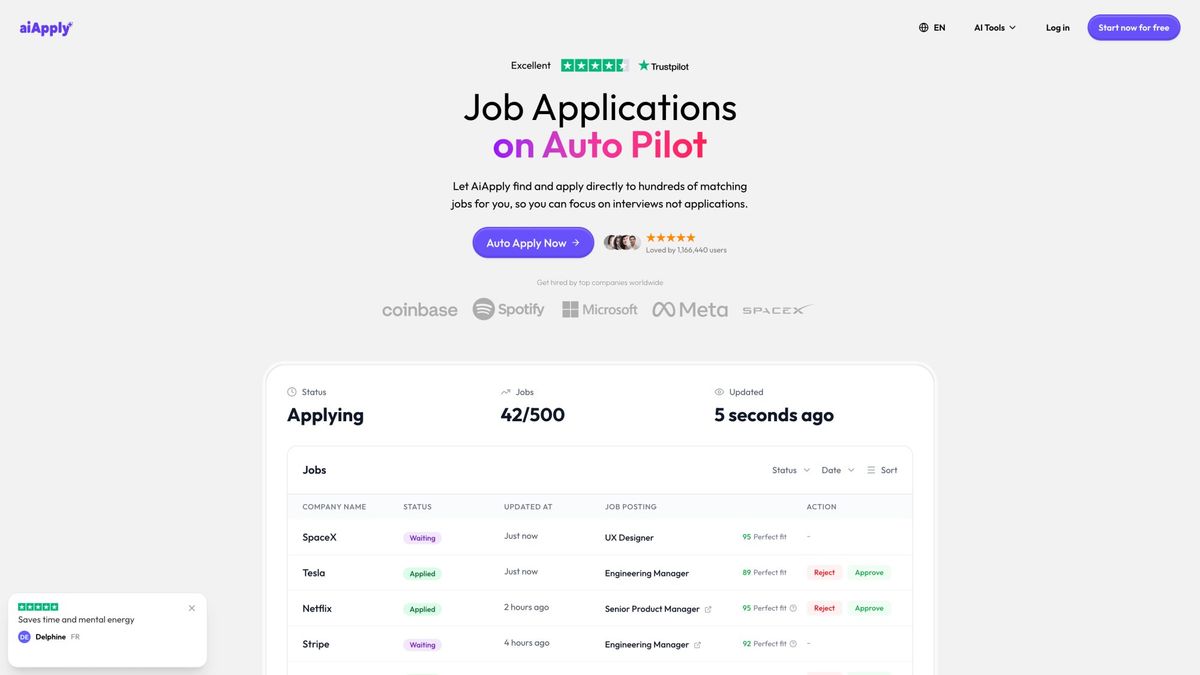
Our Auto Apply feature can submit hundreds of tailored applications while keeping your verification details consistent. You're not manually copying and pasting into different systems at 2am and making typos that create red flags.
We prepare you for the verification questions that come right before the offer.
When you reach final interviews, hiring managers often start asking detailed "verification-style" questions: "So you were at TechCorp from when to when exactly?" Our Interview Buddy helps you practice answering those questions smoothly and consistently.
We optimize every part of your job search process:
• AI Cover Letter Generator creates tailored cover letters that maintain your story
• Resume Translator helps you apply globally while keeping facts consistent
• AI Email Generator helps you follow up professionally after background checks
Background checks are stressful. But they're also predictable. If you keep your story consistent, prepare your explanations for anything that might appear, and understand what employers can actually see, you'll navigate them successfully.