What Is a Contractor Job? Meaning, Examples, and How It Works
Discover what is a contractor job really like beyond the basics. Real insights from working contractors on opportunities, challenges, and success strategies.


Contractor work is now a mainstream way to earn a living, and the U.S. rules for reporting and classifying it are changing in 2026. Here is how contractor jobs work, how they differ from employment, and how to get one.
Key takeaways
- A contractor job is project-based work done as a self-employed professional, not as a company employee.
- Independent contractors invoice clients, pay their own income and self-employment taxes, and receive no employer benefits.
- "Contract position" can also mean a W-2 role through a staffing agency, which changes your taxes and benefits.
- For payments made in 2026, clients must send a Form 1099-NEC at $2,000, up from $600.
What Is a Contractor Job?
A contractor is a self-employed professional or business hired by a company to handle specific tasks or see a project through to completion for an agreed-upon price. A contractor job is that arrangement from the worker's side: project-based work, no employee status, and your own taxes and benefits. In construction, "contractor" also means a general contractor or subcontractor who runs or works on a building project.
Most people picture a construction site or a freelance writer in a coffee shop. Both fit, and the term now covers far more.
Think of it this way: you hire a specialized plumber to fix a sudden leak. They come in, apply their expertise to solve that one problem, you pay them for their service, and they leave. You wouldn't hire them as a full-time staff member for a single leak. This project-focused relationship is the key difference between a contractor and a traditional employee.
Contractors essentially run their own businesws. They're responsible for their own taxes, insurance, and tools of the trade. Independent contractors aren't on the client's payroll and don't receive its employee benefits, such as health insurance or paid vacation. A contract position filled through a staffing agency works differently: the agency is typically your employer, and you are paid on a W-2.
This distinction is legally important, as it centers on the level of control a company has over the worker.
The IRS looks at three kinds of evidence: behavioral control (does the company direct how you work), financial control (who pays expenses and who can profit or lose), and the relationship between the parties (contracts, benefits, permanence).

As the screenshot shows, the main factor is how much control the hiring company has over the person's work a central idea in telling these roles apart.
Beyond the Gig Economy Stereotype
The modern contractor isn't just taking on small "gigs." Today's landscape includes high-level professionals in critical roles. Imagine a cybersecurity expert hired by three different banks to perform security audits or a marketing pro brought into a startup for a six-month product launch. These are serious, high-impact professional engagements.
This way of working is a huge part of the economy. The U.S. Bureau of Labor Statistics found that 7.4% of workers were independent contractors on their main job in July 2023, the latest official count. Surveys that include side gigs and occasional freelancing find far more people doing independent work: MBO Partners puts the 2026 U.S. independent workforce at a record 74.9 million, and reports that full-time independents now make up 22% of all full-time U.S. workers. The numbers differ because the two surveys define "independent" differently.
This setup offers benefits to both sides. Companies get access to specialized skills exactly when they need them, without the overhead of a full-time hire. In return, contractors gain significant control over their projects, clients, and career direction. It’s a stark contrast to the structured, top-down nature of many corporate roles.
How Does a Contractor Job Work, Start to Finish?
A contractor job runs on a written agreement that sets the scope, the timeframe and the pay, and it ends when the work is delivered unless both sides renew it or convert it to a full-time role.
- Agree on the scope. The contract lists the deliverables and what counts as done.
- Set the timeframe. Use a start and end date, or milestone dates for longer projects.
- Choose the pay structure. Hourly, a fixed fee, or milestone payments.
- Deliver and invoice. You do the work with your own tools and schedule, then invoice the client.
- End, renew or convert. The contract ends at delivery, is extended, or becomes a permanent offer.
What is the Difference Between a Contractor and an Employee?
The difference is control and financial risk: an employee works under the company's direction and has taxes withheld from each paycheck, while a contractor decides how and when to do the work, invoices for it, and pays their own taxes.
Picture two web developers, both skilled professionals. One is an employee. She arrives at the office (or logs in from home) at 9 AM, works on tasks given by her manager using a company laptop, and gets a predictable paycheck every two weeks. Her career trajectory, including promotions and projects, is largely determined by the company's structure. This path offers a sense of stability and a defined framework.
On the other hand, the contractor developer acts as a specialized service provider. She runs her business from her own office, uses her own powerful computer, and manages her schedule to meet deadlines for three different clients. She sends invoices for her work based on project scope or an hourly rate. She is the CEO, finance department, and top talent of her own one-person company. This gets to the heart of what is a contractor job: you are a business hired by another business for a specific outcome.
The Defining Lines: Control and Relationship
The core distinction comes down to control and financial dependence. Companies direct an employee's work—what to do, how to do it, and when it gets done. A contractor, however, is brought on board for a specific result. The client defines the "what" (e.g., "build a new checkout page"), but the contractor decides the "how" and "when," using their own expertise and tools to deliver.
Federal law looks at the working relationship, not the label in your contract. The IRS applies its three-part test (see C8), and the Department of Labor uses an "economic reality" test to decide whether a worker is in business for themselves or economically dependent on an employer.
On February 26, 2026, the Department of Labor proposed a rule that would replace its 2024 standard and give the most weight to two factors: how much control the worker has over the work, and the worker's opportunity for profit or loss. In the sources I found, the rule had been proposed but was not final.
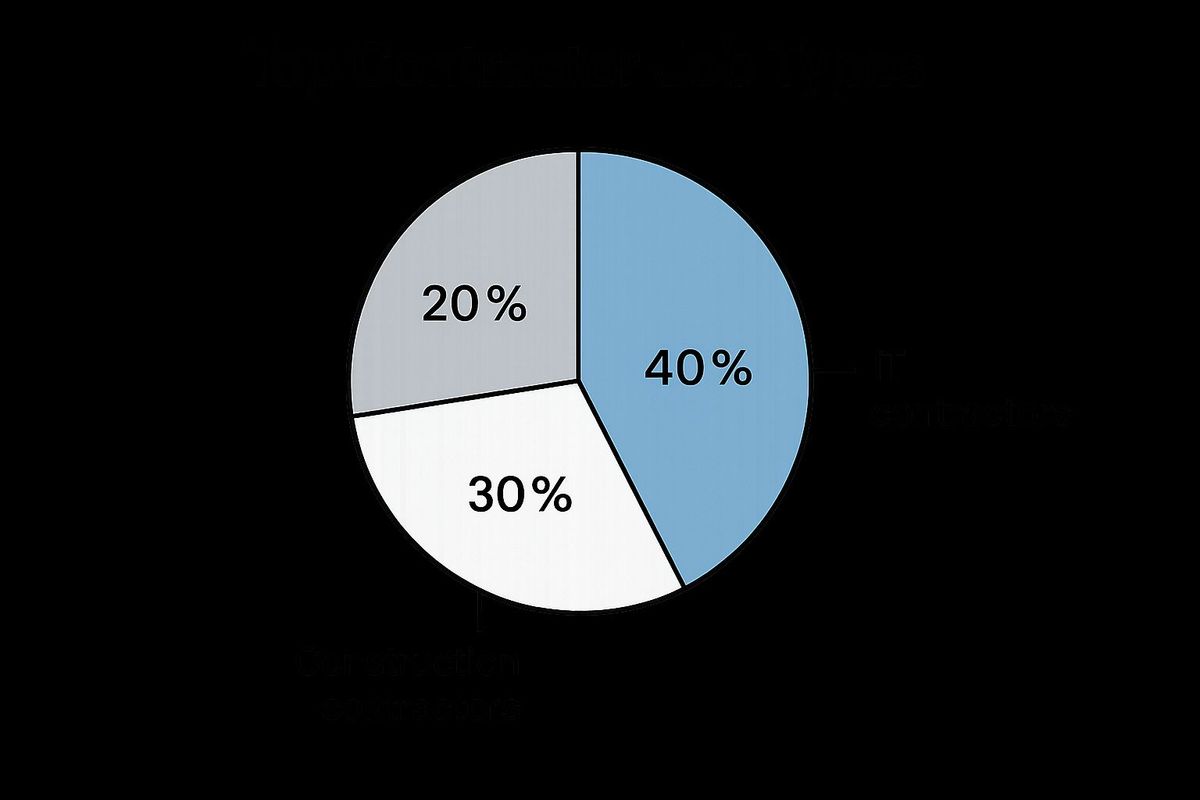
This data shows that a massive 40% of contractor positions are in the IT sector, a clear sign of the high demand for specialized tech skills on a project-by-project basis.
A Practical Comparison
To help you see the differences more clearly, let's put the two roles side-by-side. This table breaks down the key distinctions that affect everything from your bank account to your work-life balance.
| Aspect | Contractor | Employee |
|---|---|---|
| Work Arrangement | Operates as an independent business providing services to clients. High degree of autonomy over how and when work is done. | Works for a single company under direct supervision. Follows company policies and set work hours. |
| Payment and Taxes | Submits invoices for completed work. Responsible for paying self-employment taxes (Social Security, Medicare) and income tax. | Receives a regular salary or hourly wage. The employer withholds taxes from each paycheck. |
| Benefits | No employer-provided benefits. Must purchase own health insurance, fund own retirement (e.g., SEP IRA), and has no paid time off. | Typically receives a benefits package, including health insurance, paid vacation, sick leave, and access to a retirement plan like a 401(k). |
| Control and Tools | Maintains control over work methods and uses their own tools, software, and equipment. | The employer dictates work methods and provides the necessary tools and equipment (e.g., laptop, software licenses). |
| Legal Standing | A business entity (even if a sole proprietorship). Operates under a contract that defines the scope of work and deliverables. | Legally recognized as an employee, protected by labor laws regarding minimum wage, overtime, and termination. |
This comparison shows that being a contractor means taking on more responsibility in exchange for greater freedom. An employee, in contrast, gives up some autonomy for the security and structure that a traditional job provides. Neither path is better they simply cater to different professional goals and lifestyles.
What Types of Contractor Jobs and Contract Positions Are There?
Most contractor jobs fall into four types: independent contractors or freelancers, consultants, agency contract employees, and contract-to-hire roles.
| Type | Who pays you | Tax form (U.S.) | Benefits | Typical length | Example |
|---|---|---|---|---|---|
| Independent contractor or freelancer | The client | 1099-NEC | None from the client | One project to ongoing | Freelance designer |
| Consultant | The client | Usually 1099-NEC | None from the client | Project or retainer | IT systems consultant |
| Agency contract employee | The staffing agency | W-2 | Depends on the agency | Fixed term set by the assignment | Business analyst placed by an agency |
| Contract-to-hire | The client or an agency during the trial | W-2 or 1099, depending on the setup | Depends on the setup | Trial period, then possible conversion | Coordinator hired on a trial contract |
People use "contract position" and "contractor job" interchangeably. What changes your taxes and benefits is whether you are paid on a 1099 or a W-2. Link "freelance" in the first row to the freelance resume post once its URL is verified (see the internal link plan).
Which Industries Rely on Contractors?
Contractor work is common in industries where work arrives in projects, including technology, creative and marketing, and construction and skilled trades
Industries that commonly use contractors
Some industries have a natural structure that favors contracting. The project-focused nature of these fields creates a constant need for specialized skills for a set period, making contractors the perfect fit.
- Information Technology and Cybersecurity: Tech companies often require specialists for specific projects like software development, cloud migration, or system security audits. A contractor allows them to access top-tier talent without a long-term commitment.
- Creative and Marketing: Businesses frequently hire graphic designers, copywriters, and digital marketing strategists for particular campaigns or brand launches. This lets them bring in fresh perspectives for high-impact work.
Construction and Skilled Trades: This is the classic contractor territory. Specialists like electricians, plumbers, and project managers are essential to completing building projects on time and within budget.
Inside the Construction Sector
The construction industry is perhaps the most established hub for contractors. In this sector, a contractor job can range from a general laborer to a highly compensated construction manager.
The industry's reliance on contractors is amplified by significant labor shortages. The Associated Builders and Contractors trade group estimates that the U.S. construction industry needs to attract 349,000 net new workers in 2026 and 456,000 in 2027. These figures cover construction hiring overall, not contractors alone. Pay reflects that demand: the Bureau of Labor Statistics reports a median annual wage of $114,990 for construction managers in May 2025 . The entire system is built around hiring specialized third-party workers for specific project phases, making it a prime example of a contractor-driven field.
What Is the Difference Between a General Contractor and a Subcontractor?
A general contractor manages a construction project from start to finish and hires subcontractors, which are specialists such as electricians, plumbers or painters brought in for one part of the job.
The general contractor typically handles permits, budgets, scheduling and communication with the client and suppliers, and is responsible for the finished work. Licensing rules for general contractors vary by state, so check your state's requirements before you bid.
The key takeaway is that demand for contractors isn't random. It’s concentrated in industries where project cycles, specialized needs, and market forces create the ideal conditions for independent experts to flourish.
What Drives Demand for Contractors?
While the traditional job market has clear signposts, the world of contracting is more like a bustling marketplace. To do well, you need more than just good skills; you must also grasp the unseen dynamics of supply, demand, and timing. When you learn to interpret these market signals, you shift from simply looking for work to strategically managing your own business. A crucial part of understanding what is a contractor job is realizing you're not just a job seeker—you're an active participant in an economic system.
This means keeping an eye on economic cycles and what’s happening in specific industries. For example, a downturn in the economy might reduce new building projects but simultaneously boost demand for IT contractors who help companies save money through automation.
Decoding Supply and Demand
The most successful contractors are skilled at identifying and reacting to imbalances in the market. Some skills can become highly sought after almost overnight, while others get crowded. The trick is to anticipate where demand is headed before it becomes common knowledge. This is especially true in the skilled trades.
Finding qualified contractors is a constant struggle for many companies. A recent analysis found the U.S. construction industry needs to bring in about 439,000 new workers in 2025 just to keep up with project demands. The report also noted that 78% of construction firms have trouble filling skilled craft roles, and 55% believe the hiring challenge will either stay the same or get worse. This ongoing shortage gives qualified contractors significant bargaining power, leading to better pay and a consistent stream of work. You can explore the full details by reading the complete analysis from Associated Builders and Contractors.
The Power of Networks and Niche Skills
Beyond watching market trends, the best gigs often come from who you know. A strong professional network serves as an early alert system for new projects and a reliable source of referrals. The contractors who are always busy aren't just talented; they are also excellent at building and keeping up with their professional connections.
When you pair a solid network with a specialized skill, your value skyrockets. Instead of marketing yourself as a "general IT consultant," try positioning yourself as an "expert in migrating financial data to secure cloud platforms." This creates a distinct, high-value identity that clients will go out of their way to find. Learning these strategies is a key part of building a successful career, a subject we cover more in our guide on modern job search techniques. This kind of strategic focus is what separates freelancers who struggle from independent professionals who are always in demand.
Are Contractors Well Paid?
Contractors usually charge a higher hourly rate than an employee in the same role earns, because the rate has to cover costs an employer would otherwise carry: payroll taxes, health insurance, paid time off, and unbilled time between projects.
A simple way to set your rate is to add your target annual income, your benefit costs, your business costs and your estimated taxes, then divide by the hours you can realistically bill in a year.
What Are the Pros and Cons of Contractor Work?
Deciding to become a contractor is a major career move. It’s like swapping a passenger seat for the driver's seat of your professional journey. The upside is compelling: you get direct control over your schedule, the projects you take on, and your overall career direction. However, this freedom introduces a new set of responsibilities that an employer would typically manage. It's vital to understand both sides of this coin before making the switch. This isn't just about a new job; it’s about changing your entire relationship with work.

Pros of contractor work
The benefits of contractor jobs often boil down to flexibility and potential. Successful contractors design a work life that aligns with their personal goals, rather than fitting their life around a job.
- Higher Earning Potential: Contractors frequently charge higher hourly rates than their salaried peers. This is to cover their own overhead, taxes, and benefits. For professionals with specialized, in-demand skills, this creates a clear path to a greater income.
- Flexibility: You are in charge of your work hours, location, and the projects you accept. This level of autonomy is a significant draw for those looking for better work-life balance or the freedom to travel.
- Diverse Experience and Rapid Skill Growth: Engaging with multiple clients on varied projects exposes you to new industries, technologies, and work cultures. This environment can accelerate your skill development much faster than staying in a single, long-term role. Many use contracting to gain new skills, a strategy detailed in our guide on how to pivot careers.
Disadvantages of contractor Work
Of course, being your own boss also means you’re your own HR department, financial planner, and sales team. These challenges are real and demand a business-owner mentality to navigate successfully.
- Income Instability: The "feast or famine" cycle is a well-known aspect of contracting. Paychecks are not guaranteed, and a slow month can cause significant financial pressure.
- No Employer-Provided Benefits: Health insurance, retirement plans (like a 401k), and paid time off are entirely up to you.
- The Weight of Self-Management: Your responsibilities include everything from finding clients and negotiating contracts to managing taxes and marketing your services.
To help you weigh these factors, the table below provides a detailed breakdown of the advantages and challenges of contractor work, along with strategies to manage the difficulties.
Contractor Work: Comprehensive Pros and Cons Analysis
Detailed breakdown of financial, professional, lifestyle, and security aspects of contractor employment
| Category | Advantages | Challenges | Mitigation Strategies |
|---|---|---|---|
| Financial | Higher Earning Potential: Ability to set premium rates for specialized skills. | Income Instability: Work can be cyclical, leading to "feast or famine" periods. | Build a cash reserve (3-6 months of expenses), diversify client base, and use a consistent marketing strategy. |
| Professional | Rapid Skill Growth: Exposure to diverse projects, technologies, and industries. | Constant Self-Promotion: Need to continuously market yourself to secure new projects. | Develop a strong online presence (LinkedIn, personal portfolio), network consistently, and ask for client referrals. |
| Lifestyle | Unmatched Flexibility: Full control over your schedule, location, and project choice. | Isolation: Lack of a traditional team environment can be lonely. | Join professional organizations, use co-working spaces, and schedule regular virtual or in-person check-ins with peers. |
| Security | Career Control: You are the architect of your career path, not bound by a single employer. | No Benefits Package: Responsible for your own health insurance, retirement, and paid leave. | Work with a financial advisor, shop for health insurance on the marketplace, and set up a SEP IRA or Solo 401(k) for retirement. |
In short, the decision to become a contractor involves a trade-off. You exchange the security and structure of traditional employment for greater freedom and higher earning potential. The key to success is to go in with your eyes open, prepared to manage the responsibilities that come with being your own boss.
How Do You Get a Contractor Job?
The main routes to a contractor job are staffing agencies, direct outreach to hiring managers, professional networks, and job boards that let you filter for contract roles. Each works better when your resume is built around projects and results instead of a list of duties.
The hunt for contractor jobs plays by a completely different set of rules than a traditional employment search. While employees might scan massive job boards, the best contractor opportunities often appear through less obvious channels.
To succeed, you have to shift your mindset from being a job applicant to a business owner actively looking for new clients. This means building a reputation and a network that brings projects to you, rather than just chasing public listings.
The trick is to position yourself as a sought-after specialist. A company looking for a contractor isn’t just trying to fill a seat; they're buying a specific solution to a problem. This is why generic applications rarely get a response. Instead, focus on building a strong personal brand and a portfolio that showcases real results, not just a list of past duties.
Use a Resume Built for Contract Work
Contract history can look like a string of short jobs unless you frame it well. Group agency assignments under one employer and lead each project with a result, as we show in our guide to listing contract work on a resume.
Then build it in AIApply’s AI Resume Builder and use the Job Search Board to find openings.
Building a Sustainable Project Pipeline
Beyond any single tool, the most reliable strategy is creating a system that consistently brings in leads. This involves a mix of proactive outreach, networking, and delivering work so good that one-time projects turn into long-term partnerships.
- Niche Platforms: Look for job boards and communities specific to your field (like tech, design, or writing). The opportunities here are more relevant, and the competition is more focused.
- Staffing and recruitment agencies: Many specialize in one industry and place contractors on fixed-term assignments.
- Strategic Networking: Connect with other contractors and potential clients on platforms such as LinkedIn. Join industry discussions to show off your expertise. The goal is to be top-of-mind when a need arises.
- Winning Proposals: Write proposals that speak directly to the client's problems. Show that you understand their challenge and have a clear plan to solve it.
- Systematic Follow-Up: Have a system for staying in touch after a project ends. A simple check-in can lead to repeat business or valuable referrals.
Keeping all these moving parts organized is crucial. To manage your various applications and networking efforts, it's wise to use a dedicated system. Combine strategic networking with the right tools and you build a reliable pipeline of contractor work. For the full application system, see our guides to the best way to apply for jobs and how to get hired fast.
How Do Contractors Set Rates, Pay Taxes, and Manage Cash Flow?
To truly succeed as a contractor, you need to think less like someone doing a project and more like a business owner. This is the shift that builds a lasting career, one that actually supports your financial goals and the lifestyle you want. It’s about putting systems in place to handle the natural ups and downs of independent work. This pivot from technician to entrepreneur is the real key to thriving long-term, moving beyond just surviving the "feast or famine" cycle.
From Pricing to Profitability
The first order of business is to set a price that reflects your total value, not just your time. A common mistake for new contractors is to base their rates on an employee's hourly pay. This overlooks the fact that you are now responsible for your own taxes, insurance, software, and retirement savings. A solid pricing model covers all these business overhead costs and includes a healthy profit margin.
Next, you must create a financial system to manage your cash flow effectively. This involves:
- Setting aside money for taxes from every payment. U.S. contractors owe income tax plus 15.3% self-employment tax on net earnings, usually paid through quarterly estimated payments. Many contractors reserve 25 to 30 percent of each payment as a starting point. That is a rule of thumb, not IRS guidance, so confirm your number with a tax professional.
- Expecting a 1099-NEC. For payments made in 2026, a client must send you a Form 1099-NEC if it paid you $2,000 or more, up from $600 in earlier years. You owe tax on contractor income whether or not a form arrives, and clients will usually ask for a W-9 before they pay you.
- Creating a business emergency fund. This separate savings account should hold enough to cover at least 3-6 months of both business and personal expenses, helping you navigate slow periods without worry.
- Paying yourself a consistent "salary." By transferring a fixed amount from your business account to your personal one each month, you create income stability, even when client payments are unpredictable.
Client Management and Growth
Managing clients well is another fundamental business skill. It starts with setting clear expectations from the very beginning to avoid scope creep—that slow, steady expansion of a project beyond its original agreement. Use detailed contracts and statements of work to nail down deliverables, timelines, and how you'll communicate. This protects both you and your client.
Look beyond single projects and concentrate on strategic growth. This could involve creating multiple income sources, like offering consulting services in addition to your project work, or developing a digital product that showcases your expertise. You should also review your progress regularly. Set quarterly goals for your income, the number of new clients you acquire, and the new skills you want to learn. By tracking these milestones, you can make smarter decisions about where to specialize, when it's time to raise your rates, and how to build the independent career you really envision.
A contractor job trades security for control: you set your terms, but you also carry the taxes, the benefits and the gaps between projects. Price your work to cover those costs, get the terms in writing, and keep a pipeline of clients.
When you are ready to apply, AIApply’s Auto-Apply submits your applications so you can spend your time on client work.
Frequently Asked Questions
What is a contractor job in simple terms?
A contractor job is paid, project-based work you do as a self-employed professional instead of as a company employee. You agree on the scope, timeline and pay up front, invoice the client, and handle your own taxes and benefits.
Is a contractor job the same as a contract job?
Mostly, but what matters is how you are paid. A 1099 contractor is self-employed, while a W-2 contract employee is employed by a staffing agency for the length of the assignment.
Do contractors get benefits?
Independent contractors do not receive benefits from the companies that hire them, so they buy their own health insurance and fund their own retirement. W-2 contract employees placed by an agency may receive benefits from the agency, depending on the agency.
How do contractors pay taxes?
In the U.S., independent contractors pay income tax and self-employment tax themselves, usually through quarterly estimated payments. Clients must send a Form 1099-NEC when they pay $2,000 or more in 2026.
How do contractors make money?
Contractors earn money by charging clients an hourly rate, a fixed project fee or milestone payments, and they keep what is left after taxes, benefits and business costs.
Are contractors paid more than employees?
Contractors usually charge a higher hourly rate than employees in the same role, but the rate has to cover taxes, benefits and unpaid time between projects, so a higher rate does not automatically mean higher take-home pay.
How long do contractor jobs last?
A contractor job lasts as long as the contract says, from a few weeks for a single project to a year or more for ongoing work.
Can a contractor job turn into a full-time job?
Yes, through a contract-to-hire arrangement, where you work on a trial basis and the company may offer a permanent role afterward, but conversion is not guaranteed unless the contract says so.